
More than 1,000 photographs of Arctic butterflies taken in Canada will make it possible to compare their wing shapes with those of specimens collected throughout Chile. The research aims to identify possible evolutionary similarities between insects inhabiting some of the most extreme environments on Earth.
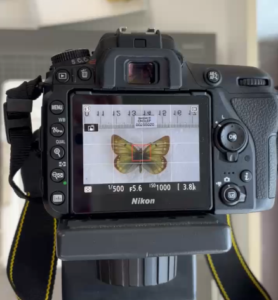
For one week, Catalina Aguilar, a master’s student in Biological Sciences at the University of Chile (UCh) and a member of the Millennium Institute Biodiversity of Antarctic and Subantarctic Ecosystems (BASE), stayed at the Canadian National Collection of Insects, Arachnids and Nematodes. There, she recorded more than 1,000 photographs of Arctic butterflies to compare them with specimens collected throughout Chile, from the Altiplano to subantarctic territories.
Polar and subpolar regions are among the most extreme environments on the planet. Challenging climatic conditions force the species inhabiting these ecosystems to develop a variety of survival strategies. But does something similar occur in organisms living at opposite ends of the world?
This is one of the questions Catalina Aguilar seeks to answer. She is a master’s student at the University of Chile, affiliated with the Evolutionary Ecology and Morphometrics Laboratory (EME Lab) and the Millennium Institute BASE, and recently completed a research stay in Ottawa, Canada.
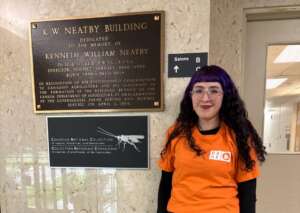
For one week, Catalina worked at the Canadian National Collection of Insects, Arachnids and Nematodes, part of the Research Branch of Agriculture and Agri-Food Canada. There, she had access to Arctic butterfly specimens belonging to the same family as those she studies in Chile: butterflies of the genus Colias.
“The idea was to observe and document butterflies that fly in environments as extreme as the Arctic and compare them with those we have studied in Chile, including specimens collected from the Altiplano to subantarctic territories,” explains the student.
The visit was made possible through a collaboration between her thesis supervisor, Dr. Hugo Benítez, a professor at Universidad Andrés Bello (UNAB) and researcher at the Millennium Institute BASE and the Cape Horn International Center (CHIC), and specialists from the Canadian collection, which houses valuable biological material from different regions of the Arctic.

“These kinds of experiences are extremely valuable for students. They also help strengthen scientific ties between researchers in Chile and Canada while creating new opportunities for collaboration in the study of insects adapted to extreme environments,” says Dr. Hugo Benítez, who is also a researcher at the One Health Institute at UNAB and Director of the EME Lab.
As part of her work, Catalina Aguilar took more than 1,000 photographs of preserved specimens, creating a database that will allow researchers to analyse their wing shape in detail using geometric morphometrics.
This methodology makes it possible to compare biological structures with a high degree of precision and detect patterns that are not always evident to the naked eye. In this case, the objective is to assess whether butterflies inhabiting extremely cold environments exhibit morphological similarities associated with their evolutionary adaptation.
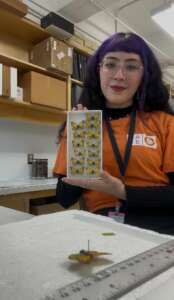
“We want to know whether these butterflies share wing characteristics that may be related to their ability to survive and fly in such extreme climates. If we find similar patterns between Arctic species and those from the southern tip of South America, we could gain new insights into how evolution responds to comparable environmental conditions,” says Aguilar.
The results of this work will contribute to a better understanding of the biodiversity of the planet’s cold ecosystems and the mechanisms that allow different species to face similar environmental challenges, even though they are separated by thousands of kilometres.
By: Constanza Barrientos
Main picture: Catalina Aguilar


