Punta Arenas, March 2024.- Earlier this week, Chile announced the detection of positive cases of Highly Pathogenic Avian Influenza (H5N1) in Antarctica, during the LX Antarctic Scientific Expedition (ECA 60) organized by the Institute Chilean Antarctic (INACH).

BASE Millennium Institute team in Antarctica, monitoring penguin colony. Photo: StudioPONANT / Morgane Monneret

For the first time, positive cases of avian flu have been detected in Adelie penguins (Pygoscelis adeliae) and Antarctic shags (Leucocarbo bransfieldensis), marking a milestone in research into the health of wildlife in this territory. This discovery was made by the Millennium Biodiversity Institute of Antarctic and Subantarctic Ecosystems (BASE Millennium Institute) in collaboration with the french company PONANT, with the participation of an international research team led by PhD. Elie Poulin (Universidad de Chile, BASE Millennium Institute) and PhD. Juliana Vianna (Pontificia Universidad Católica de Chile, BASE Millennium Institute and CGR, Lili, Institute for Sustainable Development UC), in collaboration with PhD. Céline LeBohec, from CNRS, France, and CSM, Monaco, and the Oceanographic Institute of the Albert I Prince of Monaco Foundation (IOM).

The samples were obtained at thirteen breeding sites along the Antarctic Peninsula and the western coast of the White Continent, with international support from the ship Le Commandant Charcot. Following a highly sensitive PCR analysis carried out by PhD. Fabiola León (BASE Millennium Institute, Pontificia Universidad Católica de Chile, CRG, Lili), nine cases of highly pathogenic avian influenza (H5N1) were detected in penguins and shags, being the first records of these two species in Antarctica.

Adding to this epidemiological surveillance effort is what was carried out near the Czech Johann Gregor Mendel base on James Ross Island by national researchers. An unusual mortality of skuas was reported here in early March, which alerted the team of virologists from the National Antarctic Science Program (Procien) at the Professor Julio Escudero base at INACH. This equipment was transferred aboard the Chilean Navy ship Janequeo to carry out the corresponding sampling. This tuesday, it was finally confirmed that the samples collected returned a positive result for the avian flu virus.

Aerial view of the ship Le Commandant Charcot of the Ponant company. Photo: Ponant

These analyzes are part of the INACH collaborative project “Identification and Characterization of HPAIV H5N1 in Antarctica”, led by PhD. Marcelo González, head of the INACH Scientific Department. The tests were processed at the Escudero base by veterinary doctors specialized in molecular diagnosis, headed by PhD. Víctor Neira, from the Animal Virology Laboratory (FAVET) of the Universidad de Chile.

Since the beginning of monitoring the highly pathogenic avian influenza virus in birds in Antarctica, the Scientific Committee for Antarctic Research (SCAR) has developed a project to monitor the virus in the antarctic and subantarctic territories, a work that is being carried out continuously and systematically from Chile. These findings highlight the importance of collaborative work and scientific research in Antarctica to understand and mitigate the risks associated with avian diseases in the region.


By: INACH and BASE Millennium Institute

Main image: Ponant

Together with sub-Antarctic research teams, the alternate director of the Millennium Biodiversity Institute of Antarctic and Subantarctic Ecosystems (BASE), PhD. Julieta Orlando, participated in coordination, interdisciplinary and scientific collaboration sessions.

In a meeting around international collaboration, scientific development and knowledge transfer, the Cape Horn Subantarctic Center inaugurated this Monday, May 15, its research center in Puerto Williams, with the aim of promoting excellent research from the Region Magellan and Chilean Antarctic.

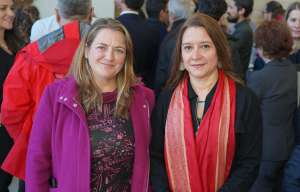
Alternate director of the BASE Millennium Institute, PhD. Julieta Orlando, together with the director of CHIC, PhD. Ricardo Rozzi. Photo: BASE Millennium I./ N. Politis.

The milestone was attended by government authorities such as the Municipality of Cabo de Hornos, the Regional Government of Magallanes and the Chilean Antarctic, the Ministry of Public Works, and the National Agency for Research and Development (ANID), the Chilean Antarctic Institute (INACH), together with representatives of the academy such as the University of Magallanes (UMAG), University of Chile, Pontificia Universidad Católica de Chile (UC), scientific research centers such as the GAIA Antarctic Research Center UMAG, Millennium Nucleus of Invasive Salmonids (INVASAL), Institute of Ecology and Biodiversity (IEB), and the community of Puerto Williams as artisans from the province and the Donald Mc Intyre Griffiths High School.

An environment of cooperation and exchange of knowledge that was highlighted by the Regional Governor of Magallanes and the Chilean Antarctic, Jorge Flies, who emphasized the local perspective that will be promoted from Puerto Williams: “The great dream is for it to be a region of world science. That is where having the BASE Millennium Institute, the University of Magallanes with CADI-UMAG, and what in a few years will be the International Antarctic Center (CAI), will allow us to achieve the highest rate of scientists per population in America, with 1 in every 120 inhabitants”, he pointed out.

While the CHIC director and principal investigator PhD. Ricardo Rozzi, highlighted the interdisciplinary work between centers: “Collaboration is a necessary condition to address problems that are complex, and the BASE-CHIC couple expresses the complementarity in collaborations, as a couple mutualist. This avoids, with limited resources, redundancy, which leads to instruments shared by BASE and CHIC, contributing to the ecosystem of centers of excellence in the Antarctic capital of Chile”.

While the director of the UMAG headquarters in Puerto Williams, Francisca Massardo highlighted collaboration as a tool for global change, to contribute to the study of environmental crises: “I think that having an infrastructure of the quality we have is a privilege and a permanent invitation to people to approach and develop research that has many points of view, to generate results among people”, he said.

Alternate director of the BASE Millennium Institute, PhD. Julieta Orlando, together with the alternate director of CHIC, PhD. Lorena Medina. Photo: BASE Millennium I. /N. Politis.

Collaboration from the Millennium Biodiversity Institute of Antarctic and Subantarctic Ecosystems (BASE) was represented through its alternate director, PhD. Julieta Orlando: “It is essential to link up, participate, and continue strengthening our ties with the Cape Horn International Center (CHIC), since we are not only linked through a shared affiliation of our researchers and researchers, but we are also building collaboration through work in research laboratories and the training of human capital with doctoral students”, she said.

PhD. Orlando, also an academic at the University of Chile and vice president of the Chilean Society for Microbiology (SOMICH), also met with researchers linked to both centers of excellence: PhD. Tamara Contador, PhD. Máximo Frangopulos, PhD. Roy Mackenzie, Melisa Gañán, Javier Rendoll and PhD. Brenda Riquelme. The instance allowed the development of field trips and the design of scientific collaboration in the field of publication and project development.

Research advances

In addition to the research and project development meetings, the alternate director of the BASE Millennium Institute, PhD. Orlando, attended the “First CHIC International Conference: Global Change and Biocultural Conservation”, which will take place until Friday, May 19 at the Cape Horn Sub-Antarctic Center promoted by CHIC. In the instance, researchers from the BASE Millennium Institute, CHIC, INVASAL and the University of Magallanes (UMAG) participated.

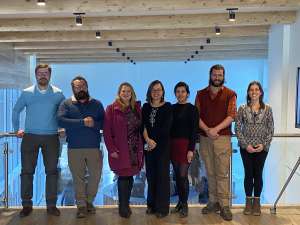
Team of researchers at the BASE Millennium Institute-CHIC . Photo: BASE Millennium I. /C. Barrientos.

With the talk “Phenology and life cycles of aquatic insects: sentinels of climate change” PhD. Tamara Contador reflected on bioethical scientific research, with emphasis on understanding Climate Change in invertebrates and sub-Antarctic and Antarctic ecosystems. The UMAG, CHIC and INVASAL researcher highlighted how adaptability and distribution can provide new responses to scientific research.

During the conference there will be scientific poster sessions, beginning on Tuesday May 16 with presentations by researchers CHIC-BASE Millennium Institute, Dr. Máximo Frangopulos, Melisa Gañán and Javier Rendoll. More information, and live streaming, at https://capehorncenter.com


By: Marcelo Sotomayor

Pictures: Nadia Politis y Constanza Barrientos

Through an international collaboration between SEDNA Expeditions and the Millennium Institute for Biodiversity of Antarctic and Sub-Antarctic Ecosystems (BASE), a group of scientists navigated the frozen waters of the Weddell Sea to carry out studies on microorganisms, lichens, mosses, flowering plants, algae, marine invertebrates, fishes, Adelie and emperor penguins.

Antarctica, January 10th, 2023.- An international collaboration has never been seen before, was the result of the work between SEDNA Expeditions and the BASE Millennium Institute in the 2022-2023 Antarctic campaign that was developed together with scientists from France, the United Kingdom, the United States, and Chile.

With the aim of studying microorganisms, lichens, mosses, flowering plants, algae, marine invertebrates, fishes, and Antarctic seabirds including Adelie and emperor penguins, a group of researchers from the BASE Millennium Institute traveled to one of the most unexplored points of the Antarctic continent, the Larsen B platform, on a 15-day expedition that took them across the Atlantic Ocean and the Weddell Sea.

“This expedition is a pioneer of its kind since it integrates international collaborative work between scientific research, tourism, and science communication, and it allowed us to obtain data from an area little explored by science”, says the director of the BASE Millennium Institute, Dr. Elie Poulin. This collaborative work is the result of an alliance with the SEDNA Expeditions company based in France.

Nicolas Dubreuil, the co-founder of SEDNA Expeditions, highlights the importance of integrating scientific knowledge into Antarctic tourist experiences, with the aim of raising awareness of the contribution of polar research among passengers from all parts of the world: “it has been a great experience working with the BASE Millennium Institute and other groups of scientists, and I believe that today -more than ever- it is very important to bring science closer to people”.

 Alex Ionescu, a world-recognized technology expert, innovator, and investor who was the promoter of the expedition, highlights the International Scientific Collaboration Expedition as a sign of joint work to protect Antarctic ecosystems: “I think it is very important to work together, listen to science and understand that our planet is the only one and that we must protect it”.

 The scientific research team collected samples and data in the field and gave popular science talks to the expedition passengers. In addition, the communication team recorded 360° videos and sounds, to be used in the project “Antarctic Metaverse: a journey of exploration to discover the biodiversity of the Southern Ocean”, which will be carried out this year as a result of the award of the “Public Science Fund” of the Ministry of Science, Technology, Knowledge, and Innovation of the Government of Chile.

The “International Scientific Collaboration Expedition: the Weddell Sea and Larsen Ice Shelf” was composed of BASE Millennium Institute: Dr. Elie Poulin, Dr. Julieta Orlando, Dr. Léa Cabrol, Dr. Juliana Vianna, Dr. Claudio González-Wevar, Dr. Pablo Guerrero, Dr. Máximo Frangopulos, Fabiola León, Dr. Alejandro Pérez-Matus (Pontificia Universidad Católica de Chile and Millennium Nucleus of Ecology and Conservation of temperate mesophotic reed ecosystems, NUTME) and Nadia Politis. The team was also supported by Carla Badani (Universidad de Chile) and Diego Ramírez (patrimonioaccesible.cl).

Text: Nadia Politis | Photo: Julieta Orlando