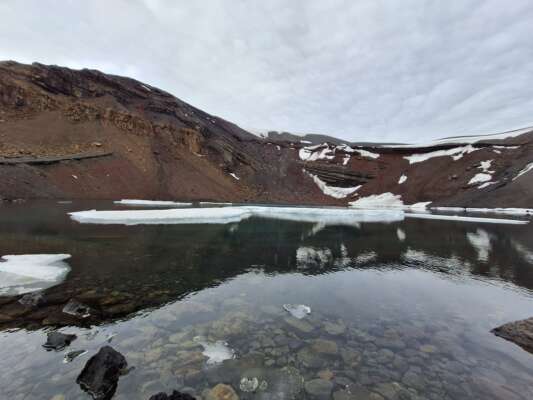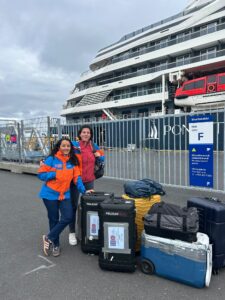
Dr. Léa Cabrol and Nayla Serey are traveling from Iceland to northeastern Greenland aboard the Le Commandant Charcot.

Until October 14, two women scientists from the BASE Millennium Institute will take part in a new scientific expedition to the Arctic Ocean. The third campaign will travel from Iceland to northeastern Greenland, including the Svalbard archipelago and Tromsø, Norway. The expedition aims to collect new data on microbial communities, environmental gradients, and the methane cycle.

Against the backdrop of climate change and the global biodiversity crisis, studying the rapidly changing polar oceans provides valuable insights into how microorganisms respond to different environmental conditions. This challenge has brought together national and international institutions through the Millennium Institute for Antarctic and Sub-Antarctic Ecosystem Biodiversity (BASE) to study what is known as “less visible biodiversity” and its important role in biogeochemical processes, particularly the methane cycle.

Thus, scientists Dr. Léa Cabrol and doctoral researcher MSc Nayla Serey have embarked on a new expedition aboard the icebreaker Le Commandant Charcot, operated by French company PONANT EXPLORATIONS. The expedition will build on the scientific record gathered during previous campaigns in Arctic and Antarctic waters, while providing new insights into the microbial communities that inhabit these waters.

“We have an extensive record of the Arctic and Antarctic oceans, and this new expedition will allow us to build on it by incorporating areas we have not previously been able to study and increasing the resolution of our sampling. We will also have the opportunity to compare the same geographic area at two different points during the summer season,” says Dr. Léa Cabrol, a researcher at the BASE Millennium Institute.
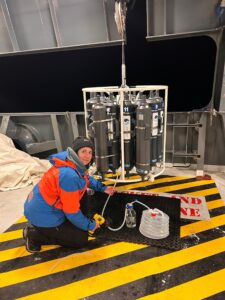
This expedition aims to gather new data on microbial communities, environmental gradients, and the methane cycle.

The 2026 campaign will build on two previous Arctic expeditions. The first took place in 2024, with a route toward the North Pole, while in 2025 the team sailed from Reykjavík to northeastern Greenland. This time, the expedition will depart from Iceland, continue toward northeastern Greenland, and pass-through Svalbard before concluding in Tromsø, Norway.

The new route will expand the geographic coverage of the sampling effort and include areas that could not be studied during the previous campaign. In particular, it will cross several oceanographic fronts—zones where the physicochemical properties of the water, such as temperature, salinity, and nutrient concentrations, change dramatically over just a few kilometers. These areas serve as key natural laboratories for better understanding how environmental change affects the marine microbial world.

During the expedition, the scientists will continuously collect surface seawater samples and also sample water at different depths using the oceanographic equipment available on board. They will also have access to sea-ice platforms, allowing them to study the microorganisms living in the ice and in the water beneath it as the ice melts. On board, the scientists will use the ship’s laboratories to process the samples, filter water, and measure dissolved methane.
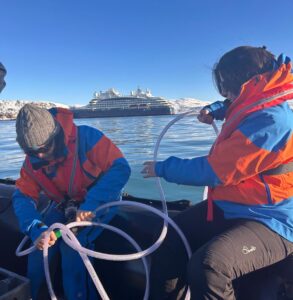
This is the third expedition the team of female scientists has conducted in the Arctic.

Back in their laboratory in Santiago, Chile, the scientists will extract genetic material from the samples to study the composition and function of microbial communities using next-generation sequencing. The data collected during the expedition will also contribute to Nayla Serey’s doctoral research, adding new observations on microbial communities and their relationship with environmental conditions. In this way, the campaign will add a new dataset to the record established during the 2024 and 2025 expeditions, allowing the team to continue investigating how these parameters vary across the Arctic Ocean.

“Taking part in a new Arctic expedition is a privilege as an early-career researcher. Our scientific data are the result of international collaborative work, and I believe they can make a significant contribution to my doctoral thesis”, says Nayla Serey. Her thesis, “Prokaryotic Communities Associated with the Methane Cycle in Polar Oceans: Diversity, Functional Potential, and Response to Environmental Change,” developed in collaboration with Dr. Léa Cabrol and Dr. Julieta Orlando, examines how microbial communities respond to environmental changes in the polar oceans and how these changes influence their role in the methane cycle in these regions.
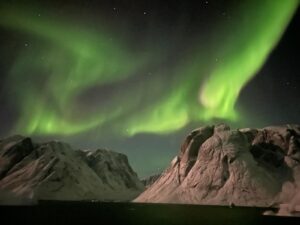
During the expedition, the researchers were able to witness the famous Northern Lights, which are characteristic of the planet’s northern hemisphere.

The temporal comparison will be one of the key elements in complementing the data collected in 2024 and 2025. While those expeditions took place at the beginning of the summer season, the 2026 campaign will be conducted later in the season. “Even when sampling takes place in similar geographic areas, environmental conditions can vary depending on the time of year when the samples are collected,” the scientists explain.

A vital scientific connection

The study region encompasses a connection between the Arctic and Atlantic oceans, where fronts form as different water masses interact. In these areas, the team will be able to observe variations in parameters such as temperature, salinity, and nutrient concentrations, and examine how these environmental gradients relate to the composition and distribution of microbial communities. To this end, samples will be collected for microbiological analyses, while methane measurements will be carried out using specialized equipment.
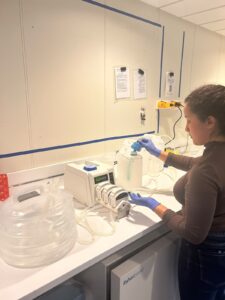
Back in their laboratory, the scientists will extract genetic material from the samples to study the composition and function of the microbial communities.

“We want to study how microbial communities vary along these environmental gradients in the polar oceans and how they are linked to the methane cycle. The new sampling sites will allow us to complement the information we already have and observe these variations across a broader geographic scale,” Nayla Serey emphasizes.

Methane is a potent greenhouse gas whose atmospheric concentration has increased exponentially over the past century. Microorganisms are primarily responsible for both its production and consumption, acting as key regulators of the global climate. The role of the ocean as a source or sink of methane is not yet fully understood, particularly in highly dynamic polar regions such as the Arctic and Southern oceans. It is therefore critical to assess the methane emission and uptake potential of these oceans across broad environmental gradients and over multiple years, and to identify the microorganisms that regulate this cycle.

The expedition is taking place against a backdrop of changes observed across different components of the Arctic system. According to the Arctic Report Card 2025, published by the U.S. National Oceanic and Atmospheric Administration (NOAA), sea surface temperatures in nearly all ice-free regions of the Arctic Ocean during August have shown an increasing trend since 1982, with an average rise of approximately 0.3°C per decade north of 65°N.

This third Arctic oceanographic campaign by the BASE Millennium Institute strengthens comparative research across the two polar oceans and expands the presence of Chilean science in international polar research.


Source and photographs: Communications Office, BASE Millennium Institute, Chile.
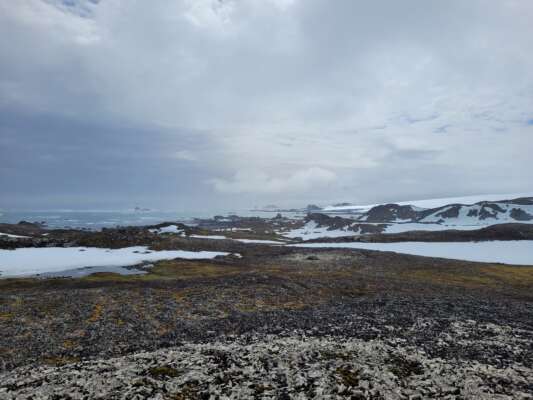
 

  • Two studies published in 2026, with the participation of researchers from the University of Chile, combined environmental DNA analysis, protein structural modelling and in situ culture devices to explore the set of genes and mechanisms associated with antimicrobial resistance, known as the resistome, in Antarctic soils.
  • The papers, developed through collaboration between the BASE Millennium Institute, the mBioClim Ring and teams from different institutions, deepen a Chilean research line that has had wide international impact and reinforce the importance of studying the White Continent from a One Health perspective, which recognises the close relationship between human, animal and environmental health.

Long before humanity began using antibiotics, microorganisms were already producing substances to compete with one another and developing mechanisms to defend themselves against them. Part of that ancient evolutionary race remains recorded in Antarctic soils, where there is a microbial diversity that is only now beginning to be explored.

Surroundings of Base Julio Escudero, Antarctica. Photo: Katherine Chávez

Two recent studies, published in the journals iMetaOmics and Environment & Health, show that the White Continent can be understood as a natural archive of the evolution of antimicrobial resistance. From complementary approaches, one reconstructed the genetic information of entire microbial communities, while the other recovered living bacteria that normally fall outside the reach of conventional cultures.

These papers add to the sustained growth of Chilean polar science. According to information released by the Chilean Antarctic Institute, researchers with a national affiliation took part in 134 Antarctic scientific publications in 2025, the highest figure recorded for the country. The two studies published in 2026 represent a continuation of this trajectory, marked by collaborative work among universities, scientific centres and national programmes.


A finding that travelled the world

The new publications have a direct precedent. In 2022, a team led by Andrés Marcoleta, faculty member at the Department of Biology of the Faculty of Sciences of the University of Chile, published a study on the resistome of soils on the Antarctic Peninsula. The research showed that these environments hosted native bacteria resistant to multiple antibiotics, especially in areas without evident human intervention, supporting the natural and ancestral character of this resistome. In some isolates resistant to colistin, a last-line antibiotic used against particularly difficult-to-treat infections, the known resistance genes were not detected, suggesting the existence of mechanisms that have not yet been characterised. Resistance genes associated with mobile genetic elements, potentially able to circulate among microorganisms, were also identified.

The finding had wide international impact and opened discussion both on the ancestral origin of resistance and on the questions posed by ice melt regarding contact between previously isolated microorganisms and other ecosystems.

That work did not remain an isolated finding. Its results and questions contributed to the development of the mBioClim Ring project, created to study how climate change modifies microbial communities in Antarctic soils and the distribution of resistance genes and traits associated with virulence.

In 2024, this line of research extended to the soils of Union Glacier, in the interior of West Antarctica, less than 1,000 kilometres from the South Pole. A less diverse microbial community was described there than that of maritime Antarctica, but with a distinctive resistome and bacteria able to resist up to 24 antibiotics.

Referring to the evolution of this research line, Dr. Andrés Marcoleta, director of the Integrative Microbiology Group (GMI_UChile) and faculty member at the Department of Biology of the Faculty of Sciences of the University of Chile, notes: “The 2022 study showed us that Antarctic soils host an extremely high diversity of bacteria, some of them resistant to multiple antibiotics used in clinical practice. This broad resistome reflects ecological and evolutionary processes that long predate the medical use of these drugs. Later work has allowed us to move from that first observation towards a deeper understanding of its diversity, its evolutionary history and the bacteria that harbour these mechanisms.”


A map of Antarctic beta-lactamases

Surroundings of Punta Armonía, Antarctica. Photo: Gaspar Mejías

The first of the new studies, published in iMetaOmics, analysed 81 metagenomes from Antarctic and subantarctic soils, that is, sets of DNA sequences that make it possible to study entire microbial communities without having to culture each microorganism. The research was led by José Coche-Miranda, Patricio Arros and Andrés Marcoleta, and included the participation of Julieta Orlando and Francisco Chávez, faculty members at the Faculty of Sciences of the University of Chile.

The work was made possible by the partnership between the BASE Millennium Institute and the mBioClim Ring, which brought together samples, data and scientific capacities developed by different teams. The study combined protein sequence comparisons with three-dimensional structure prediction and functional inference, a strategy especially useful for detecting environmental enzymes that can differ greatly, in their sequence, from those known in clinical contexts.

The researchers identified 1,916 candidate beta-lactamase sequences, enzymes capable of inactivating beta-lactam antibiotics, supported by the concordance between their sequences and their predicted molecular structures. Although their activity will still need to be confirmed experimentally, many were very different from known beta-lactamases and yet conserved the architecture and catalytic elements that characterise them. This combination of diversity and conservation is consistent with a deep evolutionary history of these enzyme families.

The beta-lactamases also showed differentiated patterns among the subantarctic islands, the Antarctic Peninsula and the continental cold deserts, reflecting changes in the composition of microbial communities. Taken together, the results reinforce the idea that resistance is not exclusively a consequence of modern medicine, but also an ancestral ecological trait, shaped by competition and the adaptation of microorganisms.

On this point, Dr. Francisco Chávez, director of the Systems Microbiology Laboratory (SysmicroLab) and faculty member at the Department of Biology of the Faculty of Sciences of the University of Chile, explains: “The aim is not to present Antarctic bacteria as an immediate threat, but to understand the ecological history of these resistance mechanisms. One Health reminds us that antimicrobial resistance cannot be studied only in hospitals: we must also observe the microorganisms, animals and ecosystems where that diversity originates and evolves”.


Recovering the microbial dark matter

The second study, published in the journal Environment & Health, approached the resistome from a complementary perspective: the recovery of living bacteria in order to study their characteristics directly.

The research was led by Jacquelinne Acuña, recently appointed as a faculty member at the Department of Biology of the Faculty of Sciences of the University of Chile. The team compared traditional culture methods with in situ culture devices, also known as culture chips. These allow microorganisms to begin growing under conditions closer to those of their original environment, before being recovered and analysed in the laboratory.

The strategy made it possible to access rare bacteria or those underrepresented in conventional cultures. When evaluating 158 isolates against 35 antimicrobial agents, the researchers found widely distributed resistance and some bacteria able to tolerate more than 20 of them. They also detected activities that in clinical contexts are associated with virulence, although their presence, on its own, does not demonstrate that these microorganisms are pathogens.

On the contribution of this approach, Dr. Acuña highlights: “In situ culture devices allow us to access a fraction of bacterial diversity that usually remains hidden. Recovering these microorganisms alive is essential to move from genetic information to the experimental confirmation of their resistance and adaptation capacities.”

Many functions classified in clinical contexts as resistance or virulence may originally have arisen to obtain nutrients, compete with other microorganisms or survive the extreme conditions of the Antarctic environment. For that reason, these results should be interpreted in their ecological context and not as direct evidence of a health threat.


Two approaches to the same question

The iMetaOmics and Environment & Health studies make it possible to observe the Antarctic resistome at complementary scales. The analysis of environmental DNA, known as metagenomics, reveals genes, proteins and evolutionary relationships at the level of entire microbial communities, while in situ culture devices make it possible to recover living microorganisms and experimentally evaluate their properties.

This integration also strengthens a new scientific capacity at the Faculty of Sciences of the University of Chile. Dr. Acuña’s experience in culturing environmental microorganisms is added to the work of Dr. Marcoleta in genomics, antimicrobial resistance and gene transfer, that of Dr. Chávez on interactions among bacteria, hosts and environments, and that of Dr. Julieta Orlando on the microbial ecology of extreme environments.

In the context of glacier retreat, studying these communities is especially relevant. As new ice-free soils appear, microorganisms that were previously isolated may become part of new ecological networks. This does not necessarily imply the emergence of health risks, but it does underline the need to integrate genetic analysis, culture and environmental monitoring in order to understand how microorganisms respond to a continent in transformation.

From a broader perspective, Dr. Julieta Orlando, deputy director of the BASE Millennium Institute and faculty member at the Department of Ecological Sciences of the Faculty of Sciences of the University of Chile, emphasises: “Antarctica is not a territory disconnected from the rest of the planet. The processes that occur there are part of global ecological systems. Studying its microbial biodiversity not only expands our knowledge of life under extreme conditions, but also provides information needed to understand and protect ecosystem health in a changing world.”

Together, the studies consolidate Antarctica as a natural laboratory for reconstructing the deep history of antimicrobial resistance and observing how it may reorganise on a planet in transformation. The next steps will be to experimentally confirm the activity of the candidate enzymes, determine which of these genes can move between bacteria, and maintain monitoring series that make it possible to distinguish the natural resistome from changes associated with ice melt or human activity.

Rather than announcing an immediate threat, this research line seeks to build knowledge and establish baselines that make it possible to anticipate changes, guide environmental surveillance and protect ecosystems whose microbial diversity we still know only in part.


Press release: SysMicro, LEMi, GMI_UChile.

With over 130 participants gathered in Inari, Finland, UArctic held its annual assembly, hosted by the Sámi Education Institute. The event marked a milestone, welcoming the largest number of new members in the network’s 20-year history — with Chile’s Millennium Institute BASE standing out as the sole representative from both Chile and Latin America.

The University of the Arctic (UArctic) is a network of universities, research institutes, training centers, and other organizations dedicated to education and research in and about the North. Is a decentralized organization with several offices across the Arctic countries, and its annual assembly took place from June 6 to 9, 2025, in Finland.

Among the key announcements, Frederik Paulsen was re-elected as Chair of the UArctic Council for a second three-year term (2025–2028). The network also welcomed 21 new member institutions — 13 from Arctic regions and eight from other parts of the world. Chile’s BASE Millennium Institute on Biodiversity of Antarctic and Subantarctic Ecosystems (BASE Millennium Institute) was the only institution from Latin America to join.

In the field of Arctic research, the BASE Millennium Institute is spearheading several cutting-edge studies.

“We’re excited about this new partnership, which not only allows us to share our scientific expertise in Antarctic ecosystems, but also to bring fresh perspectives from our recent Arctic expeditions, launched in 2024 in collaboration with the French company PONANT,” said Dr. Elie Poulin, professor at the University of Chile and director of the BASE Millennium Institute.

In the field of Arctic research, the BASE Millennium Institute is spearheading several cutting-edge studies. One key project, led by Dr. Juliana Vianna (BASE/PUC/CRG) in collaboration with Dr. Lucas Kruger (BASE/INACH), explores the adaptive convergence of seabirds in the Arctic and Antarctic. Another initiative, headed by Dr. Léa Cabrol (BASE/IRD/MIO) alongside Dr. Julieta Orlando (BASE/UCH), focuses on Arctic and Antarctic microbial communities, particularly their role in regulating oceanic methane balance. A third line of research, directed by Dr. Hugo Benítez (BASE/UNAB/CHIC) in partnership with Dr. Tamara Contador (BASE/UMAG/CHIC/INVASAL), examines insect adaptations to Arctic environments.

Connecting with Global Experiences

With the latest additions, UArctic now counts 212 member institutions. “This milestone reflects Arctic’s increasingly inclusive and interdisciplinary approach to Arctic issues,” the organization stated. Alongside the Millennium Institute BASE, new members include Carleton University, Institut National de la Recherche Scientifique (INRS), New York University, Norwegian Police University College, University of Chicago, University of Ottawa, the Institute for Circumpolar Health Research (ICHR), and the Norwegian Institute for Water Research (NIVA).

BASE Millennium Institute was the only institution from Latin America to join.

Founded under the framework of the Arctic Council, UArctic aims to strengthen and develop shared capacities and infrastructure that enable its member institutions to support and contribute to their communities and regions. The network maintains a strong commitment to sustainable development principles and to the United Nations Sustainable Development Goals (SDGs).

UArctic also promotes a circumpolar vision that is inclusive and respectful—valuing cultural diversity and Indigenous knowledge of the North. It fosters open, barrier-free collaboration across cultures and academic systems, encouraging broad participation in the creation of knowledge. In addition, it provides guidance to support sustainable development and informed decision-making in the Arctic region.

The Assembly confirmed that the next UArctic Congress and Assembly will take place from May 26 to 29, 2026, in Tórshavn, Faroe Islands, hosted by the University of the Faroe Islands.

More information: https://www.uarctic.org/news


By: Nadia Politis / BASE Millennium Institute

Cover photo: UArtic