The new tool makes it possible to access information about the frozen continent, its ecosystems, scientific research and the role Chile plays in the development of polar knowledge. The project seeks to bring Antarctic science closer to the public using an everyday platform, available 24 hours a day.
Getting to know Antarctica no longer requires opening a specialised book or browsing dozens of websites. From today, anyone can freely access a chatbot available on WhatsApp, designed to answer questions about Antarctica, its ecosystems and the scientific research Chile carries out on the continent. The initiative, promoted by the BASE Millennium Institute, seeks to bring Antarctic knowledge closer to the public through an everyday platform.
Users can ask, for example, why Antarctica is key to regulating the planet’s climate, how scientific teams live during an expedition, what Chile’s historical relationship with this territory is, or resolve questions about the Antarctic Treaty System, which seeks to care for, govern and protect the White Continent and its marine areas.
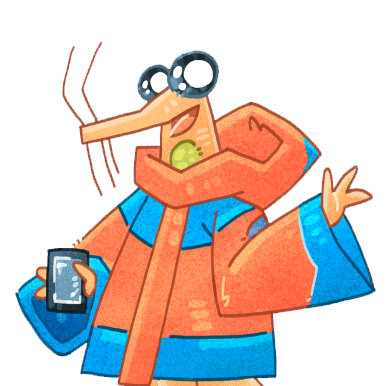
Answers are delivered through a charismatic avatar, or platform character, illustrated by Chilean artist Raúl Matus: an Antarctic krill that, in an approachable language and with information based on scientific evidence, communicates with users: “We set out to develop this Antarctic chatbot to invite people, and especially young people, to learn more about Antarctica. Not only its scientific research, but also its close relationship with Chile through law, history, literature or even cinema,” says Dr. Elie Poulin, faculty member at the University of Chile and director of the BASE Millennium Institute.
More than a conversational assistant, the project seeks to become a gateway to Antarctic knowledge generated from Chile. Students, teachers, journalists and the general public can access polar information without prior knowledge: “The chatbot’s contents come from what we have learned at science fairs, schools and citizen meetings. We incorporated people’s most frequent doubts, curiosities and questions about Antarctica, while also making visible the knowledge generated from different cities in Chile in research,” underlines Dr. Julieta Orlando, faculty member at the University of Chile, president of SOMICH and deputy director of the BASE Millennium Institute.
The initiative has the backing of several institutions that promote education, science outreach and access to knowledge about Antarctica.

They include the National Center for Artificial Intelligence (CENIA), the Chilean Antarctic Institute (INACH), the Antarctic Youth Coalition, APECS Chile, Wikimedia Chile, the National Youth Institute (INJUV), the Guides and Scouts Association of Chile, the Encuentros del Futuro Foundation and the Association of Municipalities of Chile (AMUCH).
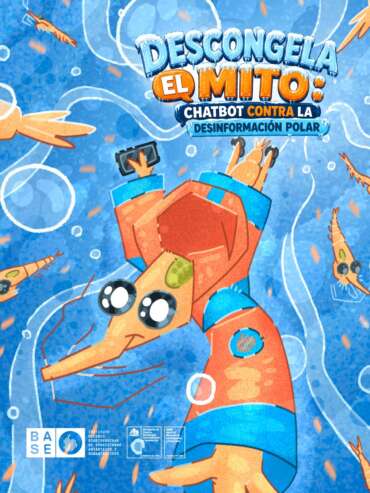
The development of the chatbot was made possible thanks to the support of the National Agency for Research and Development (ANID), through the 2026 External Projection Fund, and arises from the project “Unfreeze the myth: Chatbot against polar misinformation”, an initiative that will run workshops and talks in the cities of Santiago, Valdivia, Concepción, Punta Arenas and Puerto Williams to reflect on myths and false or inaccurate news about Antarctica, digital literacy and critical thinking, together with research and teaching groups from the BASE Millennium Institute and the supporting institutions.
Free access is available at wa.me/56972874940 and in the coming days the Instagram account @mileniobase will launch a contest to find a name for the Antarctic krill that stars in the chatbot, and that will seek to answer all the questions of people in Chile.
Antarctic education
“Unfreeze the Myth: Chatbot against polar misinformation” is a science outreach and education initiative promoted by the BASE Millennium Institute to bring information about Antarctica, polar ecosystems, their biodiversity and the scientific research developed from Chile. The project seeks to contribute to open access to knowledge through a free and easy-to-use platform for all citizens.
The chatbot is a science outreach and education tool. Its answers and materials are exclusively educational and are prepared from scientific literature, academic sources and publicly available information. The content provided does not represent official positions of the State of Chile nor does it constitute an expression of the National Antarctic Policy. Likewise, the initiative does not address or promote positions regarding international controversies, territorial claims, or interpretations of sovereignty, maintaining an approach centred on the communication of validated scientific knowledge and on respect for the principles of the Antarctic Treaty System.
The development of the chatbot was made possible thanks to the support of the National Agency for Research and Development (ANID), of Chile’s Ministry of Science, Technology, Knowledge and Innovation, through the 2026 External Projection Fund, which finances initiatives aimed at strengthening the link between scientific research and society.
Photo credit: BASE Millennium Institute