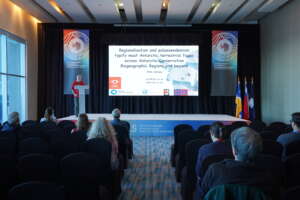
With a 16-member delegation, the BASE Millennium Institute is taking part in the 12th SCAR Open Science Conference, one of the leading international gatherings dedicated to Antarctic research. Scientists and professionals from the ANID centre of excellence travelled to Oslo to share research findings, experiences, and progress in the study and communication of the frozen continent.
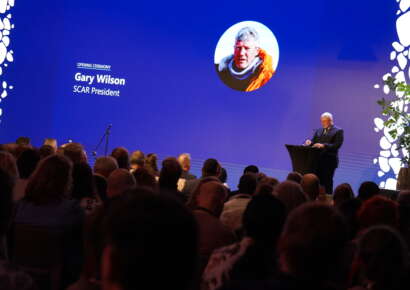
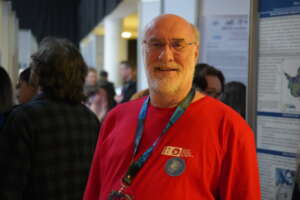
Dr. Gary Wilson, President of the Scientific Committee on Antarctic Research (SCAR) and expert in marine geology and polar climate change. Photo: Constanza Barrientos.
During August, Oslo becomes one of the world’s main meeting points for Antarctic research. The Norwegian capital is hosting specialists from different countries and disciplines in a programme with around 50 scientific sessions, aimed at sharing new knowledge and strengthening international collaboration around Antarctica and the Southern Ocean.
Once again, the BASE Millennium Institute is joining the 12th Open Science Conference of the Scientific Committee on Antarctic Research (SCAR), with a delegation that includes principal investigators Elie Poulin (University of Chile), Karin Gérard (UMAG), Luis Valentín Ferrada (Law, University of Chile), César Cárdenas (INACH) and Hugo Benítez (UNAB/CHIC), together with senior researchers Pete Convey (BASE) and Steven Chown (Monash University).
They are joined by a new generation of researchers who will present progress and results from their work in Antarctic science. Among them are early-career researchers: Daly Noll (U. Lagos), Giovannina Sutherland (Law, University of Chile / ICLAC), Jordan Hernández (UCM), Franco Cruz (Universidad Santo Tomás), Albert Palomino (UACh), Miguel Ángel Salazar (University of Rennes), Eduardo Pizarro (PUC/CRG) and Morgane Durand (National Museum of Natural History of France).
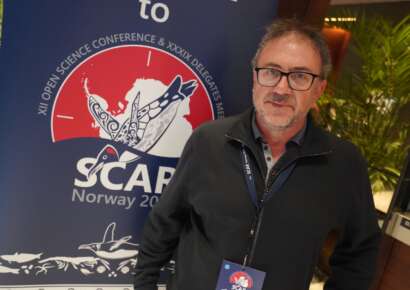
Dr. Elie Poulin takes part in thematic roundtables and the presentation of scientific results. Photo: Constanza Barrientos.
“Taking part in SCAR once again, with a diverse delegation, allows us to share the knowledge we are generating at the BASE Millennium Institute and, at the same time, strengthen our ties with an international scientific community that will be essential for the challenges ahead. We are moving towards milestones of great relevance for polar science, such as the next International Polar Year: 2032-2033, and these spaces are key to building new collaborations and scientific questions from now on,” highlights Elie Poulin, director of the BASE Millennium Institute and faculty member at the Faculty of Sciences of the University of Chile.
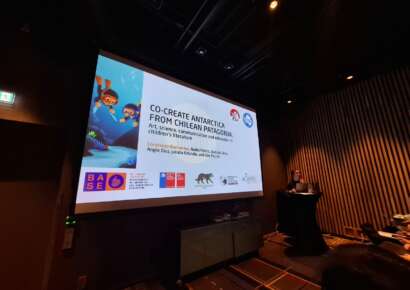
Constanza Barrientos presents the upcoming BASE book “We dive with mum… in Antarctica!” (Editorial SurCiencia). Photo: Giovannina Sutherland.
The Communications and Education Directorate (DIRECOM) is also represented by science journalist Constanza Barrientos, who will give three oral presentations and a poster. Her participation will share Antarctic science outreach experiences developed by the BASE Millennium Institute to bring polar knowledge closer to different audiences.
The presentations by the also president of the Chilean Antarctic Youth Coalition Foundation, in Punta Arenas, will address experiences in children’s literature, Antarctic education, Artificial Intelligence and new technologies, showing how different languages, formats and tools can help broaden the social reach of knowledge generated about Antarctica.
By: Nadia Politis
Photographs: Constanza Barrientos from Oslo, Norway.
Two studies published in 2026, with the participation of researchers from the University of Chile, combined environmental DNA analysis, protein structural modelling and in situ culture devices to explore the set of genes and mechanisms associated with antimicrobial resistance, known as the resistome, in Antarctic soils.
The papers, developed through collaboration between the BASE Millennium Institute, the mBioClim Ring and teams from different institutions, deepen a Chilean research line that has had wide international impact and reinforce the importance of studying the White Continent from a One Health perspective, which recognises the close relationship between human, animal and environmental health.
Long before humanity began using antibiotics, microorganisms were already producing substances to compete with one another and developing mechanisms to defend themselves against them. Part of that ancient evolutionary race remains recorded in Antarctic soils, where there is a microbial diversity that is only now beginning to be explored.
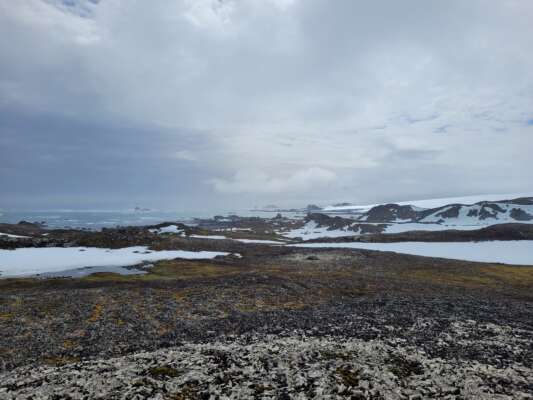
Surroundings of Base Julio Escudero, Antarctica. Photo: Katherine Chávez
Two recent studies, published in the journals iMetaOmics and Environment & Health, show that the White Continent can be understood as a natural archive of the evolution of antimicrobial resistance. From complementary approaches, one reconstructed the genetic information of entire microbial communities, while the other recovered living bacteria that normally fall outside the reach of conventional cultures.
These papers add to the sustained growth of Chilean polar science. According to information released by the Chilean Antarctic Institute, researchers with a national affiliation took part in 134 Antarctic scientific publications in 2025, the highest figure recorded for the country. The two studies published in 2026 represent a continuation of this trajectory, marked by collaborative work among universities, scientific centres and national programmes.
A finding that travelled the world
The new publications have a direct precedent. In 2022, a team led by Andrés Marcoleta, faculty member at the Department of Biology of the Faculty of Sciences of the University of Chile, published a study on the resistome of soils on the Antarctic Peninsula. The research showed that these environments hosted native bacteria resistant to multiple antibiotics, especially in areas without evident human intervention, supporting the natural and ancestral character of this resistome. In some isolates resistant to colistin, a last-line antibiotic used against particularly difficult-to-treat infections, the known resistance genes were not detected, suggesting the existence of mechanisms that have not yet been characterised. Resistance genes associated with mobile genetic elements, potentially able to circulate among microorganisms, were also identified.
The finding had wide international impact and opened discussion both on the ancestral origin of resistance and on the questions posed by ice melt regarding contact between previously isolated microorganisms and other ecosystems.
That work did not remain an isolated finding. Its results and questions contributed to the development of the mBioClim Ring project, created to study how climate change modifies microbial communities in Antarctic soils and the distribution of resistance genes and traits associated with virulence.
In 2024, this line of research extended to the soils of Union Glacier, in the interior of West Antarctica, less than 1,000 kilometres from the South Pole. A less diverse microbial community was described there than that of maritime Antarctica, but with a distinctive resistome and bacteria able to resist up to 24 antibiotics.
Referring to the evolution of this research line, Dr. Andrés Marcoleta, director of the Integrative Microbiology Group (GMI_UChile) and faculty member at the Department of Biology of the Faculty of Sciences of the University of Chile, notes: “The 2022 study showed us that Antarctic soils host an extremely high diversity of bacteria, some of them resistant to multiple antibiotics used in clinical practice. This broad resistome reflects ecological and evolutionary processes that long predate the medical use of these drugs. Later work has allowed us to move from that first observation towards a deeper understanding of its diversity, its evolutionary history and the bacteria that harbour these mechanisms.”
A map of Antarctic beta-lactamases
Surroundings of Punta Armonía, Antarctica. Photo: Gaspar Mejías
The first of the new studies, published in iMetaOmics, analysed 81 metagenomes from Antarctic and subantarctic soils, that is, sets of DNA sequences that make it possible to study entire microbial communities without having to culture each microorganism. The research was led by José Coche-Miranda, Patricio Arros and Andrés Marcoleta, and included the participation of Julieta Orlando and Francisco Chávez, faculty members at the Faculty of Sciences of the University of Chile.
The work was made possible by the partnership between the BASE Millennium Institute and the mBioClim Ring, which brought together samples, data and scientific capacities developed by different teams. The study combined protein sequence comparisons with three-dimensional structure prediction and functional inference, a strategy especially useful for detecting environmental enzymes that can differ greatly, in their sequence, from those known in clinical contexts.
The researchers identified 1,916 candidate beta-lactamase sequences, enzymes capable of inactivating beta-lactam antibiotics, supported by the concordance between their sequences and their predicted molecular structures. Although their activity will still need to be confirmed experimentally, many were very different from known beta-lactamases and yet conserved the architecture and catalytic elements that characterise them. This combination of diversity and conservation is consistent with a deep evolutionary history of these enzyme families.
The beta-lactamases also showed differentiated patterns among the subantarctic islands, the Antarctic Peninsula and the continental cold deserts, reflecting changes in the composition of microbial communities. Taken together, the results reinforce the idea that resistance is not exclusively a consequence of modern medicine, but also an ancestral ecological trait, shaped by competition and the adaptation of microorganisms.
On this point, Dr. Francisco Chávez, director of the Systems Microbiology Laboratory (SysmicroLab) and faculty member at the Department of Biology of the Faculty of Sciences of the University of Chile, explains: “The aim is not to present Antarctic bacteria as an immediate threat, but to understand the ecological history of these resistance mechanisms. One Health reminds us that antimicrobial resistance cannot be studied only in hospitals: we must also observe the microorganisms, animals and ecosystems where that diversity originates and evolves”.
Recovering the microbial dark matter
The second study, published in the journal Environment & Health, approached the resistome from a complementary perspective: the recovery of living bacteria in order to study their characteristics directly.
The research was led by Jacquelinne Acuña, recently appointed as a faculty member at the Department of Biology of the Faculty of Sciences of the University of Chile. The team compared traditional culture methods with in situ culture devices, also known as culture chips. These allow microorganisms to begin growing under conditions closer to those of their original environment, before being recovered and analysed in the laboratory.
The strategy made it possible to access rare bacteria or those underrepresented in conventional cultures. When evaluating 158 isolates against 35 antimicrobial agents, the researchers found widely distributed resistance and some bacteria able to tolerate more than 20 of them. They also detected activities that in clinical contexts are associated with virulence, although their presence, on its own, does not demonstrate that these microorganisms are pathogens.
On the contribution of this approach, Dr. Acuña highlights: “In situ culture devices allow us to access a fraction of bacterial diversity that usually remains hidden. Recovering these microorganisms alive is essential to move from genetic information to the experimental confirmation of their resistance and adaptation capacities.”
Many functions classified in clinical contexts as resistance or virulence may originally have arisen to obtain nutrients, compete with other microorganisms or survive the extreme conditions of the Antarctic environment. For that reason, these results should be interpreted in their ecological context and not as direct evidence of a health threat.
Two approaches to the same question
The iMetaOmics and Environment & Health studies make it possible to observe the Antarctic resistome at complementary scales. The analysis of environmental DNA, known as metagenomics, reveals genes, proteins and evolutionary relationships at the level of entire microbial communities, while in situ culture devices make it possible to recover living microorganisms and experimentally evaluate their properties.
This integration also strengthens a new scientific capacity at the Faculty of Sciences of the University of Chile. Dr. Acuña’s experience in culturing environmental microorganisms is added to the work of Dr. Marcoleta in genomics, antimicrobial resistance and gene transfer, that of Dr. Chávez on interactions among bacteria, hosts and environments, and that of Dr. Julieta Orlando on the microbial ecology of extreme environments.
In the context of glacier retreat, studying these communities is especially relevant. As new ice-free soils appear, microorganisms that were previously isolated may become part of new ecological networks. This does not necessarily imply the emergence of health risks, but it does underline the need to integrate genetic analysis, culture and environmental monitoring in order to understand how microorganisms respond to a continent in transformation.
From a broader perspective, Dr. Julieta Orlando, deputy director of the BASE Millennium Institute and faculty member at the Department of Ecological Sciences of the Faculty of Sciences of the University of Chile, emphasises: “Antarctica is not a territory disconnected from the rest of the planet. The processes that occur there are part of global ecological systems. Studying its microbial biodiversity not only expands our knowledge of life under extreme conditions, but also provides information needed to understand and protect ecosystem health in a changing world.”
Together, the studies consolidate Antarctica as a natural laboratory for reconstructing the deep history of antimicrobial resistance and observing how it may reorganise on a planet in transformation. The next steps will be to experimentally confirm the activity of the candidate enzymes, determine which of these genes can move between bacteria, and maintain monitoring series that make it possible to distinguish the natural resistome from changes associated with ice melt or human activity.
Rather than announcing an immediate threat, this research line seeks to build knowledge and establish baselines that make it possible to anticipate changes, guide environmental surveillance and protect ecosystems whose microbial diversity we still know only in part.
Press release: SysMicro, LEMi, GMI_UChile.
Dr Peter Convey has forged a close relationship with Chile, working actively with national teams in the study of subantarctic biodiversity. Visiting the Molecular Ecology Laboratory (LEM) at the University of Chile, the terrestrial ecologist – with nearly 40 years of experience at the British Antarctic Survey (BAS)– reflects on scientific collaboration, Antarctic biodiversity, and the future of the frozen continent.
A journey that linked the United Kingdom with Puerto Williams, and concluded in Santiago de Chile by projecting new scientific collaborations: this is how terrestrial ecologist Dr Peter Convey summed up his year so far. During his visit to Chile, he described his connection with the country as a “long-standing relationship”. For the BAS scientist, we are facing a crucial moment for research into adaptation, biodiversity, and biogeography – areas in which science plays a fundamental role.
Dr Peter Convey and Dr Claudia Maturana during the BASE/PONANT expedition to Antarctica and the South Georgia Islands in 2023. Credit: Dr Tamara Contador.
– What aspects define biodiversity?
It is complex to define Biodiversity, and that is something most people are not familiar with. One element of biodiversity is the count of species. Other elements relate to aspects such as their abundance, what population sizes exist and what kinds of traits they have that allow them to survive in their environment. That may not seem like biodiversity.
– And regarding knowledge of Antarctic biodiversity?
Most of the organisms that live in Antarctica are unfamiliar to most people, even the small invertebrates. I could show them in gardens or forests here and most people would not know they exist. Here, you can find very close relatives of the same organisms that live in Antarctica. However, most people have never learnt about them or realised they exist. In addition, there are many truly microbial groups that can only be observed with a microscope.
Dr Convey is a terrestrial ecologist with nearly 40 years of experience in polar ecosystem research, having worked on 15 summer campaigns and one winter in Antarctica, as well as on various Arctic expeditions in Svalbard (Norway). His work at the British Antarctic Survey (BAS) has made him a reference in the study of biodiversity and the effects of climate change in polar regions.
Dr Peter Convey and Dr Tamara Contador in the Falkland Islands / Islas Malvinas during the SAERI expedition in 2024. Credit: Dr Tamara Contador.
Science from the end of the world
The senior researcher at the BASE Millennium Institute has established a strong connection with the Chilean scientific community, especially through his collaboration with Dr Tamara Contador, researcher at the BASE Millennium Institute. Their joint work has expanded knowledge about Antarctic terrestrial ecosystems and their response to environmental pressures. This collaboration has been fundamental in strengthening Chile’s role in polar research, promoting participation in international projects and the development of conservation strategies.
The Honorary Professor at the School of Biosciences, University of Birmingham (United Kingdom), has also been a key actor in shaping international scientific priorities through the Scientific Committee on Antarctic Research (SCAR). He has worked on programmes such as Evolution and Biodiversity in Antarctica and Regional Sensitivity to Climate Change in Antarctica, contributing to the understanding of biological evolution under extreme conditions and the impacts of climate change. His studies have demonstrated the resilience and adaptation capacity of Antarctic biodiversity, providing key data for the conservation of these fragile ecosystems.
Through collaboration with the Wankara Laboratory of Subantarctic and Antarctic Freshwater Ecosystems, the University of Magallanes (UMAG), and the Cape Horn International Centre for Global Change Studies and Biocultural Conservation (CHIC), in addition to the BASE Millennium Institute, the research line led by Dr Tamara Contador (UMAG/CHIC/BASE/INVASAL) has established bridges between science and education through – for example – environmental workshops at the Omora Ethnobotanical Park in the city of Puerto Williams.
Dr Peter Convey, Dr Tamara Contador, Dr Sebastián Rosenfeld and Dr Claudia Maturana in the field during the BASE/PONANT expedition to Antarctica and the South Georgia Islands in 2023. Credit: Dr Tamara Contador.
The research, highlighted in the article “Discovering the role of insects in climate resilience”, emphasises the importance of Parochlus steinenii as an essential biological indicator for understanding how Antarctic ecosystems respond to climate change. Initially, Dr Contador’s research focused on Parochlus steinenii, an insect that inhabits the South Shetland Islands, but is also found in South Georgia and at the southern tip of South America, in the Cape Horn archipelago. “That immediately led us to become interested in its physiology, how it survives in its environment, its morphology and its biogeography, that is, how long the different populations have been there,” explained Dr Convey.
In his role as a science communicator, the British Antarctic Survey researcher has also played an active role in education and outreach of Antarctic and polar research. His participation as a STEM Ambassador and his teaching work in various universities reinforce the importance of international collaboration in Antarctic science.
Dr Peter Convey at the XI Open Conference of the Scientific Committee on Antarctic Research (SCAR) in Pucón, Chile, in 2024. Credit: Constanza Barrientos.
– In what way could scientific knowledge be communicated to the public?
I believe one of the most spectacular things about Antarctica is its uniqueness. The environment, the ice, the penguins are so different from everything else we have seen. The biodiversity of Antarctica is unique, especially because many species exist only there. Penguins, for example, although common in other latitudes, only inhabit Antarctica. The conservation of its biodiversity is essential, and a species does not need to be large or colourful to be important. In addition, biodiversity in Antarctica is complex, with different unique regions within the continent. We must protect all that biodiversity, and as a Chilean foreigner, I recognise that it is a unique example of global biodiversity. There are mechanisms to protect it through the Antarctic Treaty, but to do so, we need to know it better. Despite human risks, Antarctica remains largely pristine, and we are still in a position to contribute to its protection.
“Changes in Antarctica have profound consequences for all of us,” notes Dr Peter Convey, also Visiting Professor of Polar Biology at the Department of Zoology, University of Johannesburg, South Africa. Reflection that arises after referring to the VIII Chilean Congress of Antarctic Research (CCIA) which, together with the XII Latin American Congress of Antarctic Science (CLCA), was held in Valdivia from 28 July to 1 August 2025, as well as the XIV International Symposium on Antarctic Earth Sciences (ISAES), held from 18 to 22 August 2025 in Punta Arenas, which once again brought Convey to the Magallanes and Chilean Antarctic region. Instances that seek to exchange knowledge and promote the exchange of ideas around Antarctic and subantarctic science.
Dr Peter Convey presenting at the XIV International Symposium on Antarctic Earth Sciences. Credit: Constanza Barrientos.
“A new year of relevance for Antarctic science in Chile,” underlines the British polar researcher, referring to 2025 as the “International Year of Glacier Preservation” declared by the UN and accompanied by the proclamation of 21 March each year as World Glacier Day. An opportunity to raise public awareness worldwide about the fundamental role of glaciers, as well as about the economic, social and environmental repercussions of the imminent changes in the Earth’s cryosphere, notes the international body.
Dr Peter Convey warned about the need to take urgent measures to conserve Antarctica, one of the last pristine environments on the planet. “We are in a position where we can make a great contribution to protecting it,” he affirmed, stressing that “the knowledge we obtain today is crucial to protect these ecosystems in the future.”
He also highlights the importance of international cooperation in polar research, mentioning his work with Chilean institutions such as the BASE Millennium Institute and the University of Magallanes. In this regard, he calls for strengthening research with more resources and global commitment: “We still have time to do things right. Antarctica is one of the last pristine spaces on the planet and we have the responsibility to protect it for future generations,” concluded the Antarctic-subantarctic researcher.
By Benjamín Groff and Nadia Politis
Edited by Constanza Barrientos
Photographs: Tamara Contador, Constanza Barrientos and Nadia Politis / BASE Millennium Institute
References:
Chown, S.L. et al. (2022). Antarctic Climate Change and the Environment: A Decadal Synopsis and Recommendations for Action. SCAR, Cambridge.
Cannone, N. et al. (2022). Acceleration of climate warming and vascular plant expansion in maritime Antarctica. Current Biology, 32, 1-8. DOI: 10.1016/j.cub.2022.01.074.
Bokhorst, S. et al. (2022). Temperature impact on the influence of penguin-derived nutrients and mosses on non-native grass in a simulated polar ecosystem. Global Change Biology, 28, 816–828. DOI: 10.1111/gcb.15979.
With over 130 participants gathered in Inari, Finland, UArctic held its annual assembly, hosted by the Sámi Education Institute. The event marked a milestone, welcoming the largest number of new members in the network’s 20-year history — with Chile’s Millennium Institute BASE standing out as the sole representative from both Chile and Latin America.
The University of the Arctic (UArctic) is a network of universities, research institutes, training centers, and other organizations dedicated to education and research in and about the North. Is a decentralized organization with several offices across the Arctic countries, and its annual assembly took place from June 6 to 9, 2025, in Finland.
Among the key announcements, Frederik Paulsen was re-elected as Chair of the UArctic Council for a second three-year term (2025–2028). The network also welcomed 21 new member institutions — 13 from Arctic regions and eight from other parts of the world. Chile’s BASE Millennium Institute on Biodiversity of Antarctic and Subantarctic Ecosystems (BASE Millennium Institute) was the only institution from Latin America to join.
In the field of Arctic research, the BASE Millennium Institute is spearheading several cutting-edge studies.
“We’re excited about this new partnership, which not only allows us to share our scientific expertise in Antarctic ecosystems, but also to bring fresh perspectives from our recent Arctic expeditions, launched in 2024 in collaboration with the French company PONANT,” said Dr. Elie Poulin, professor at the University of Chile and director of the BASE Millennium Institute.
In the field of Arctic research, the BASE Millennium Institute is spearheading several cutting-edge studies. One key project, led by Dr. Juliana Vianna (BASE/PUC/CRG) in collaboration with Dr. Lucas Kruger (BASE/INACH), explores the adaptive convergence of seabirds in the Arctic and Antarctic. Another initiative, headed by Dr. Léa Cabrol (BASE/IRD/MIO) alongside Dr. Julieta Orlando (BASE/UCH), focuses on Arctic and Antarctic microbial communities, particularly their role in regulating oceanic methane balance. A third line of research, directed by Dr. Hugo Benítez (BASE/UNAB/CHIC) in partnership with Dr. Tamara Contador (BASE/UMAG/CHIC/INVASAL), examines insect adaptations to Arctic environments.
Connecting with Global Experiences
With the latest additions, UArctic now counts 212 member institutions. “This milestone reflects Arctic’s increasingly inclusive and interdisciplinary approach to Arctic issues,” the organization stated. Alongside the Millennium Institute BASE, new members include Carleton University, Institut National de la Recherche Scientifique (INRS), New York University, Norwegian Police University College, University of Chicago, University of Ottawa, the Institute for Circumpolar Health Research (ICHR), and the Norwegian Institute for Water Research (NIVA).
BASE Millennium Institute was the only institution from Latin America to join.
Founded under the framework of the Arctic Council, UArctic aims to strengthen and develop shared capacities and infrastructure that enable its member institutions to support and contribute to their communities and regions. The network maintains a strong commitment to sustainable development principles and to the United Nations Sustainable Development Goals (SDGs).
UArctic also promotes a circumpolar vision that is inclusive and respectful—valuing cultural diversity and Indigenous knowledge of the North. It fosters open, barrier-free collaboration across cultures and academic systems, encouraging broad participation in the creation of knowledge. In addition, it provides guidance to support sustainable development and informed decision-making in the Arctic region.
The Assembly confirmed that the next UArctic Congress and Assembly will take place from May 26 to 29, 2026, in Tórshavn, Faroe Islands, hosted by the University of the Faroe Islands.
The capital of the Los Ríos region becomes a crucial place for researching the resistance of Antarctic fish to hypoxia induced by climate change. Alaska researcher PhD. Kristin O’Brien and chilean researcher PhD. Luis Vargas-Chacoff are collaborating to find conservation responses and strategies to this challenge.
PhD. Kristin O’Brien University of Alaska Fairbanks (UAF). Photo: BASE Millennium Institute / A. Bertrand.
With 25 years of experience in Antarctic science, PhD. Kristin O’Brien, professor of biology at the University of Alaska Fairbanks (UAF), arrived in the city of Valdivia – located in the Los Ríos region, Chile – to work with the researcher from the Faculty of Sciences of the University Austral of Chile (UACh), BASE Millennium Institute and IDEAL Center.PhD. Luis Vargas Chacoff. The aim is to study the ability of Antarctic notothenioid fish and their ancestor, Eleginops maclovinus – also known as snook – to cope with hypoxia generated by climate change.
As temperatures rise, the oxygen level in the oceans decreases, and hypoxic events are becoming more frequent and severe in the world’s oceans. To understand how this phenomenon affects them, the research team has focused their attention on the snook, a species located in the Los Ríos region, and which is the closest ancestor to the most abundant group of fish in the Southern Ocean surrounding the frozen continent: the notothenioids.
“To accurately predict the impacts of climate change on Antarctic fish, it is important to understand the ability of their ancestor, E. maclovinus, to cope with climate change. In addition, because this fish has never inhabited the icy waters of the Southern Ocean, by comparing its biology to its Antarctic relatives, we can identify the traits that allowed Antarctic fish to adapt and thrive in their frigid environment”, explains PhD. Kristin O’Brien.
PhD. Luis Vargas-Chacoff and PhD. Kristin O’Brien working at Calfuco Coastal Laboratory UACh. By: BASE Millennium Institute / A. Bertrand.
Through experiments, the team is measuring the minimum amount of oxygen that these fish require to survive, as well as their physiological and biochemical ability to adapt. The research results are expected to show the ability of these animals to resist lack of oxygen as the ocean warms and may reveal new mechanisms to control hypoxia.
“We have different knowledge that complements each other. I highly value PhD. Vargas-Chacoff’s expertise in stress physiology, osmoregulation, and the immune system of fish. It brings to the project knowledge and experience that the other members of the group do not have so that we can better understand the ability of these animals to resist climate change”, says PhD. Kristin O’Brien, who is also affiliated with the Institute of Arctic Biology at UAF.
PhD. Kristin O’Brien’s visit included the collection of samples and work at the Calfuco Coastal Laboratory, belonging to the Faculty of Sciences of the UACh. “I am tremendously grateful to PhD. Vargas-Chacoff, the Calfuco Coastal Laboratory and UACh for this opportunity to work with them. Daniela Nualart (PhD student in Aquaculture Sciences, BASE Millennium Institute scholarship) and Francisco Dann have been tremendously helpful and important members of our team while working here. We could not have completed our research without them”, she says.
Research team at Calfuco Coastal Laboratory UACh. By: BASE Millennium Institute / A. Bertrand.
For his part, the Doctor of Sciences, Luis Vargas-Chacoff, recently appointed director of the Graduate School of the UACh Faculty of Sciences, states that “the collaboration with PhD. O’Brien and her team is essential to understand how climate change affects Antarctic fish. Our combined knowledge will allow us to gain a more complete understanding. I am grateful for this opportunity to collaborate on such a crucial project for Antarctic science”.
“As a local researcher, I greatly value the opportunity to contribute to this work. Antarctic science is not only carried out in Antarctica itself; it is vital to recognize that regions such as Valdivia play a fundamental role in this field, being able to contribute with scientific and physiological knowledge of different biological models or native species that can be affected by global climate change”, adds the UACh doctoral student, BASE Millennium Institute and IDEAL Center, Daniela Nualart.
The project is funded primarily by the National Science Foundation (NSF) and also features UAF graduate student Augustus Snyder and PhD. Yangfan Zhang of Harvard University.
By: Constanza Barrientos Soto
Main image: Research team at Calfuco Coastal Laboratory UACh. By: BASE Millennium Institute / Antonia Bertrand
The project led by the BASE Millennium Institute of Chile and the University of Burgundy of Dijon, France, seeks to establish a coastal observation network to identify exotic species present in marine ecosystems and promote international collaboration and knowledge exchange.
Patagonia, Kerguelen islands and the Antarctic peninsula are the regions whose coasts will be monitored by the project led by PhD. Elie Poulin, from theBASE Millennium Institute, and PhD. Thomas Saucède from the University of Burgundy. An initiative financed by the National Research and Development Agency (ANID) and the Evaluation and Guidance Committee of Scientific Cooperation with Chile of the Government of France (ECOS).
The project, which lasts three years (2023-2025), aims to establish an observing network for detection of exotic subantarctic and Antarctic species and monitor marine biodiversity using Autonomous Reef Monitoring Structures (ARMS), through the metabarcoding technique. This molecular technique allows the identification and quantification of species in water and sediment samples based on the DNA present in them.
The director of the BASE Millennium Institute and academic at the University of Chile (UCh), PhD. Elie Poulin, points out that “these species, introduced by human activities in non-native ecosystems, can have negative consequences on biodiversity and pristine ecosystems. The initiative seeks to improve understanding of the presence and potential impacts of these species through extensive monitoring in key areas. The project hypothesis states that many of these exotic species do not survive underwater winter temperatures, which keeps them unknown in conventional biodiversity records”.
The ECOS-ANID project “Monitoring of subantarctic alien species in Antarctic Peninsula: setting-up a network of nearshore observing systems in Patagonia, Kerguelen and Antarctica”, has a team of professionals from different regions of Chile and France. From the BASE Millennium Institute: PhD. Karin Gerard (University of Magallanes CIGA UMAG, CHIC, LEMAS), PhD. Angie Díaz Lorca (University of Concepción), Carolina Pérez Troncoso (master’s student at the University of Magallanes), Sebastián Rosenfeld (doctoral student at the University of Chile, CHIC, Apecs Chile) and Erwan Courville (University of Burgundy), From the Sorbonne University, with PhD. Cyrill Gallut.
International collaboration and knowledge exchange
PhD. Thomas Saucède has been collaborating for more than ten years with researchers from the BASE Millennium Institute, in biogeography and phylogeography of marine invertebrates (mollusks, echinoids and fish). Regarding the current project, he points out that “it is a good opportunity to continue collaborating based on our good complementarity in terms of access to the field and to samples throughout the Southern Ocean”.
“It allows us to unite and collaborate in areas such as Patagonia and Antarctica, on the part of the Millennium BASE Institute, and in the subantarctic archipelagos of Crozet and Kerguelen, on my part. “We also complement each other in terms of methodology (genetics, genomics, morphology, taxonomy, biogeography, paleontology) to address important questions related to the origin, evolution and sensitivity of marine species to climate changes at the scale of the Southern Ocean in a comprehensive manner”, he adds.
From left to right: Ewan Courville, PhD. Thomas Saucède and PhD. Elie Poulin. Photo: BASE Millennium Institute / Carolina Gajardo
During March 2024, PhD. Thomas Saucède spent two weeks in PhD. Elie Poulin’s laboratory at the UCh, working alongside the doctoral student, Erwan Courville, who develops his thesis under co-tutorship with both researchers. Erwan is doing a phylogenetic and biogeographic study of the sea urchin genus Arbacia.
“This mobility program gives us the opportunity to co-tutor and train master’s and doctoral students between Chile and France in molecular ecology. Erwan Courville is currently completing a comprehensive phylogenetic and biogeographic study of the echinoid genus Arbacia, including the southern species. “We are working on publishing his results and completing his doctoral thesis”, says the Burgundy University academic.
By: Carolina Gajardo y Constanza Barrientos
Main image: Karin Gerard
The vacancy is available for chileans and foreigners with an academic degree of Doctor in accredited national programs or their foreign equivalents, in disciplines relevant to the required profile. Applications will be open until April 30, 2024.
The Biodiversity Institute of Antarctic and Subantarctic Ecosystems (BASE) seeks to provide a postdoctoral scientific position in Niche Models or Species Distribution Models (SDMs), a call to which Chileans or foreigners can participate to carry out research within the framework of Project ICN2021_002.
Looking for a person, preferably in regions, for biodiversity research in Antarctic and subantarctic areas, with management of software in the field of Geographic Information Systems, preferably ArcGis. In addition, with medium-advanced knowledge of the R language, knowledge of modeling packages and script development.
The submission of background information must be made through the email administracion@institutobase.cl and the deadline expires on April 30, 2024. The final resolution regarding the award of postdoctoral positions will be made by the Council of Principal Researchers of the project in May 2024.
For more details about the contest, review the rules:
Main image: BASE Millennium Institute / Pablo Guerrero
Punta Arenas, March 2024.- Earlier this week, Chile announced the detection of positive cases of Highly Pathogenic Avian Influenza (H5N1) in Antarctica, during the LX Antarctic Scientific Expedition (ECA 60) organized by the Institute Chilean Antarctic (INACH).
BASE Millennium Institute team in Antarctica, monitoring penguin colony. Photo: StudioPONANT / Morgane Monneret
For the first time, positive cases of avian flu have been detected in Adelie penguins (Pygoscelis adeliae) and Antarctic shags (Leucocarbo bransfieldensis), marking a milestone in research into the health of wildlife in this territory. This discovery was made by the Millennium Biodiversity Institute of Antarctic and Subantarctic Ecosystems (BASE Millennium Institute) in collaboration with the french company PONANT, with the participation of an international research team led by PhD. Elie Poulin (Universidad de Chile, BASE Millennium Institute) and PhD. Juliana Vianna (Pontificia Universidad Católica de Chile, BASE Millennium Institute and CGR, Lili, Institute for Sustainable Development UC), in collaboration with PhD. Céline LeBohec, from CNRS, France, and CSM, Monaco, and the Oceanographic Institute of the Albert I Prince of Monaco Foundation (IOM).
The samples were obtained at thirteen breeding sites along the Antarctic Peninsula and the western coast of the White Continent, with international support from the ship Le Commandant Charcot. Following a highly sensitive PCR analysis carried out by PhD. Fabiola León (BASE Millennium Institute, Pontificia Universidad Católica de Chile, CRG, Lili), nine cases of highly pathogenic avian influenza (H5N1) were detected in penguins and shags, being the first records of these two species in Antarctica.
Adding to this epidemiological surveillance effort is what was carried out near the Czech Johann Gregor Mendel base on James Ross Island by national researchers. An unusual mortality of skuas was reported here in early March, which alerted the team of virologists from the National Antarctic Science Program (Procien) at the Professor Julio Escudero base at INACH. This equipment was transferred aboard the Chilean Navy ship Janequeo to carry out the corresponding sampling. This tuesday, it was finally confirmed that the samples collected returned a positive result for the avian flu virus.
Aerial view of the ship Le Commandant Charcot of the Ponant company. Photo: Ponant
These analyzes are part of the INACH collaborative project “Identification and Characterization of HPAIV H5N1 in Antarctica”, led by PhD. Marcelo González, head of the INACH Scientific Department. The tests were processed at the Escudero base by veterinary doctors specialized in molecular diagnosis, headed by PhD. Víctor Neira, from the Animal Virology Laboratory (FAVET) of the Universidad de Chile.
Since the beginning of monitoring the highly pathogenic avian influenza virus in birds in Antarctica, the Scientific Committee for Antarctic Research (SCAR) has developed a project to monitor the virus in the antarctic and subantarctic territories, a work that is being carried out continuously and systematically from Chile. These findings highlight the importance of collaborative work and scientific research in Antarctica to understand and mitigate the risks associated with avian diseases in the region.
By: INACH and BASE Millennium Institute
Main image: Ponant
The alternate director of the Millennium BASE Institute, Julieta Orlando, emphasized the significance of the white continent for the planet, during a keynote talk organized by the Center for Research and Advanced Studies of the Universidad Católica del Maule.
BASE Millenium Institute associate researcher, PhD. Hugo Benítez, and alternate director of the BASE Millennium Institute, PhD. Julieta Orlando. Photo: BASE Millennium I.
“Protecting Antarctic biodiversity is important for humanity”. With this statement, the alternate director of the Millennium BASE Institute, Julieta Orlando, emphasized why the frozen continent is considered the heart of the planet, during a master lecture she gave at the Universidad Católica del Maule (UCM).
“While Antarc tica looks remote and isolated, it is very interconnected. What happens there can affect other latitudes, including permanent human settlements, and therefore the protection of that biodiversity not only takes care of that balance, but also the global one”, said the associate professor of the University of Chile in the activity organized by the Center for Research and Advanced Studies of Maule (CIEAM, in Spanish), belonging to the campus.
The event, which was attended by the dean of the Faculty of Agricultural and Forestry Sciences of the institution, Claudio Fredes, was aimed at commemorating Antarctica Month.
CIEAM Researcher, PhD. Alexis Castillo. Photo: Universidad Católica del Maule
“It is also important to maintain the balance in this territory because there are many resources within the biodiversity that are not yet known but could prove useful in the future”, stated the PhD of Sciences, who has made several contributions to polar research, considers both charismatic and well-known organisms, as well as imperceptible microorganisms that could mitigate climate change.
The scientist has participated in ten expeditions to the southernmost continent in the world, which celebrates its day every November 6, commemorating the milestone established by former President Pedro Aguirre Cerda when he defined the limits of the Chilean Antarctic Territory in 1940.
PhD. Julieta Orlando, alternate director of the BASE Millennium Institute. Photo: BASE Millennium I. / N. Politis
“The Chilean Antarctic Institute, INACH, envisions Antarctica being recognized not just on a specific day, but throughout a whole month, so that all people, even from Arica, Iquique or Antofagasta, can feel that this territory is an integral part of their country and the planet”, she emphasized.
In addition to Orlando, doctors Aparna Banerjee, Alexis Castillo and Felipe Gordillo, as well as the director of CIEAM and researcher at the Millennium BASE Institute, PhD. Hugo Benítez, shared their experiences on the white continent.
“The center has two Antarctic science projects that were awarded two years ago. With this event, we aimed to showcase our high-level research in the Antarctic environment, and invite students to participate of it with internships and doctoral or master’s theses”, said Benítez.
“I came to Chile for an exchange with the Catholic University of Chile (UC), I wanted to live in a country with research networks in Antarctic science. When I arrived, I sent an email to the Association of Polar Early Career Scientists (APECS) of Chile and to my Edinburgh professors with contacts here, looking for an opportunity to get involved with the Antarctic scientific community from APECS Chile, they offered me to visit the Molecular Ecology Laboratory of the University of Chile (Uch).
Emily Gschwind with the doctoral researcher of the BASE Millennium Institute, Sebastián . Photo: BASE Millennium I. / N. Politis.
My name is Emily Gschwind, I am from Germany, but I am studying marine biology at the University of Edinburgh in Scotland, and that is where I first learned about APECS. Antarctica always caught my attention, so when I was in my first year of college and I met one of my professors, who researches microflora in Antarctica, I asked him about opportunities for ecology students and he told me about APECS.
In this exchange I learned a lot, it was the first time I was so far from home, from my family and friends. Arriving without knowing anyone and with a low level of spanish was the most difficult thing I’ve ever done, but also, thanks to it, I was able to learn and grow. I learned to speak spanish, I met friends who were my second family, I learned to adapt to new places and situations, and I was able to travel and get to know Chile, one of the most beautiful and diverse countries in the world. I was also able to explore new interests, such as rock climbing, salsa dancing, and cooking.
I loved living in Santiago, what I liked the most were the new opportunities that the city offers, from culture and history and social movements, to the mountains and the incredible nature that is around. In Santiago there are always new things to explore. Being a mountaineer, I took advantage of how close the mountain range is to the city, and went hiking almost every weekend. I am from Berlin, a very flat place, so the part of living in Santiago that I liked the most was the opportunity to climb hills so frequently.
Emily Gschwind. Photo: BASE Millennium I. / N. Politis.
This experience has motivated me to link my scientific career with Antarctica more than ever, I have always been interested in Antarctic science, and this experience made my dream of working in it a real possibility for me. I am sure that I want to continue with this type of research (marine ecology) in the future, and especially on the white continent. Thanks to this experience I have seen the importance of Antarctic research, and also the great variety of topics that are studied and everything that this work means.
At first I was a little nervous, because it was my first marine biology internship, and my first experience working in a laboratory, but working with Sebastián Rosenfeld and PhD. Elie Poulin has been a great experience. I am very grateful to them for helping me, teaching me and making me feel welcome in the team. I learned a lot and gained a lot of confidence.
Now I plan my scientific career doing ecological research in Antarctica, working in the field. But in the near future, I’m going to finish my final year of undergraduate first, and then I see myself pursuing a master’s and then a PhD in marine ecology, but I’m not sure yet specifically. I would like to do more internships and further explore my interests in marine ecology before deciding. Hopefully in one of these steps I can return to Chile!“
By: Emily Gschwind
—
Emily Gschwind is an undergraduate student at the University of Edinburgh in Scotland and carried out taxonomic identification of shallow molluscs from the Weddell Sea, South Georgia Island and the Falkland/Malvinas islands, within the framework of conducting biodiversity inventories promoted by the BASE Millennium Institute supported by the doctoral researcher and specialist in molluscs PhD. (c) Sebastián Rosenfeld and by the director of the Molecular Ecology Laboratory of the University of Chil, also director of the BASE Millennium Institute, PhD. Elie Poulin.
Main photo: BASE Millennium I. / N. Politis
Antarctic chatbotBASE Millennium Institute Project
Type your message to contact us on WhatsApp
Hi! I'm an Antarctic krill ❄️ 🦐
And I'll be your guide to learn more about Antarctica. Do you have any questions? 👇