• Two studies published in 2026, with the participation of researchers from the University of Chile, combined environmental DNA analysis, protein structural modelling and in situ culture devices to explore the set of genes and mechanisms associated with antimicrobial resistance, known as the resistome, in Antarctic soils.
  • The papers, developed through collaboration between the BASE Millennium Institute, the mBioClim Ring and teams from different institutions, deepen a Chilean research line that has had wide international impact and reinforce the importance of studying the White Continent from a One Health perspective, which recognises the close relationship between human, animal and environmental health.

Long before humanity began using antibiotics, microorganisms were already producing substances to compete with one another and developing mechanisms to defend themselves against them. Part of that ancient evolutionary race remains recorded in Antarctic soils, where there is a microbial diversity that is only now beginning to be explored.
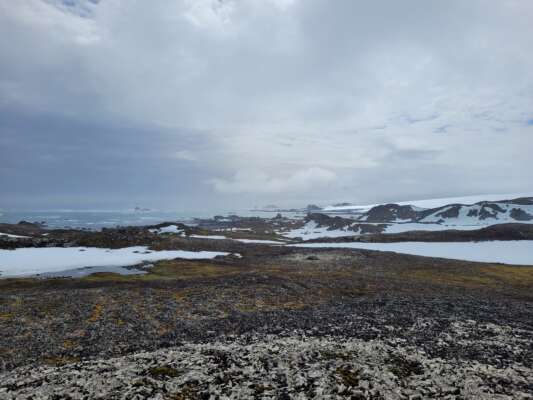
Surroundings of Base Julio Escudero, Antarctica. Photo: Katherine Chávez

Two recent studies, published in the journals iMetaOmics and Environment & Health, show that the White Continent can be understood as a natural archive of the evolution of antimicrobial resistance. From complementary approaches, one reconstructed the genetic information of entire microbial communities, while the other recovered living bacteria that normally fall outside the reach of conventional cultures.

These papers add to the sustained growth of Chilean polar science. According to information released by the Chilean Antarctic Institute, researchers with a national affiliation took part in 134 Antarctic scientific publications in 2025, the highest figure recorded for the country. The two studies published in 2026 represent a continuation of this trajectory, marked by collaborative work among universities, scientific centres and national programmes.


A finding that travelled the world

The new publications have a direct precedent. In 2022, a team led by Andrés Marcoleta, faculty member at the Department of Biology of the Faculty of Sciences of the University of Chile, published a study on the resistome of soils on the Antarctic Peninsula. The research showed that these environments hosted native bacteria resistant to multiple antibiotics, especially in areas without evident human intervention, supporting the natural and ancestral character of this resistome. In some isolates resistant to colistin, a last-line antibiotic used against particularly difficult-to-treat infections, the known resistance genes were not detected, suggesting the existence of mechanisms that have not yet been characterised. Resistance genes associated with mobile genetic elements, potentially able to circulate among microorganisms, were also identified.

The finding had wide international impact and opened discussion both on the ancestral origin of resistance and on the questions posed by ice melt regarding contact between previously isolated microorganisms and other ecosystems.

That work did not remain an isolated finding. Its results and questions contributed to the development of the mBioClim Ring project, created to study how climate change modifies microbial communities in Antarctic soils and the distribution of resistance genes and traits associated with virulence.

In 2024, this line of research extended to the soils of Union Glacier, in the interior of West Antarctica, less than 1,000 kilometres from the South Pole. A less diverse microbial community was described there than that of maritime Antarctica, but with a distinctive resistome and bacteria able to resist up to 24 antibiotics.

Referring to the evolution of this research line, Dr. Andrés Marcoleta, director of the Integrative Microbiology Group (GMI_UChile) and faculty member at the Department of Biology of the Faculty of Sciences of the University of Chile, notes: “The 2022 study showed us that Antarctic soils host an extremely high diversity of bacteria, some of them resistant to multiple antibiotics used in clinical practice. This broad resistome reflects ecological and evolutionary processes that long predate the medical use of these drugs. Later work has allowed us to move from that first observation towards a deeper understanding of its diversity, its evolutionary history and the bacteria that harbour these mechanisms.”


A map of Antarctic beta-lactamases
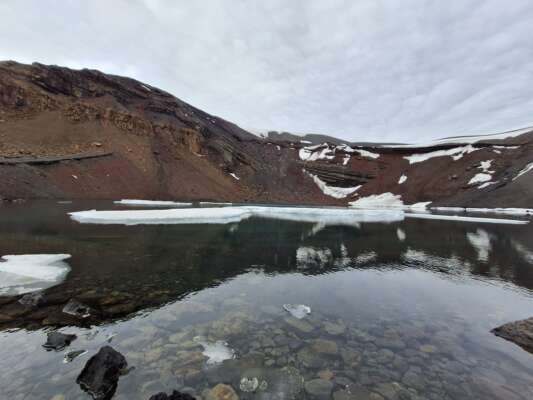
Surroundings of Punta Armonía, Antarctica. Photo: Gaspar Mejías

The first of the new studies, published in iMetaOmics, analysed 81 metagenomes from Antarctic and subantarctic soils, that is, sets of DNA sequences that make it possible to study entire microbial communities without having to culture each microorganism. The research was led by José Coche-Miranda, Patricio Arros and Andrés Marcoleta, and included the participation of Julieta Orlando and Francisco Chávez, faculty members at the Faculty of Sciences of the University of Chile.

The work was made possible by the partnership between the BASE Millennium Institute and the mBioClim Ring, which brought together samples, data and scientific capacities developed by different teams. The study combined protein sequence comparisons with three-dimensional structure prediction and functional inference, a strategy especially useful for detecting environmental enzymes that can differ greatly, in their sequence, from those known in clinical contexts.

The researchers identified 1,916 candidate beta-lactamase sequences, enzymes capable of inactivating beta-lactam antibiotics, supported by the concordance between their sequences and their predicted molecular structures. Although their activity will still need to be confirmed experimentally, many were very different from known beta-lactamases and yet conserved the architecture and catalytic elements that characterise them. This combination of diversity and conservation is consistent with a deep evolutionary history of these enzyme families.

The beta-lactamases also showed differentiated patterns among the subantarctic islands, the Antarctic Peninsula and the continental cold deserts, reflecting changes in the composition of microbial communities. Taken together, the results reinforce the idea that resistance is not exclusively a consequence of modern medicine, but also an ancestral ecological trait, shaped by competition and the adaptation of microorganisms.

On this point, Dr. Francisco Chávez, director of the Systems Microbiology Laboratory (SysmicroLab) and faculty member at the Department of Biology of the Faculty of Sciences of the University of Chile, explains: “The aim is not to present Antarctic bacteria as an immediate threat, but to understand the ecological history of these resistance mechanisms. One Health reminds us that antimicrobial resistance cannot be studied only in hospitals: we must also observe the microorganisms, animals and ecosystems where that diversity originates and evolves”.


Recovering the microbial dark matter

The second study, published in the journal Environment & Health, approached the resistome from a complementary perspective: the recovery of living bacteria in order to study their characteristics directly.

The research was led by Jacquelinne Acuña, recently appointed as a faculty member at the Department of Biology of the Faculty of Sciences of the University of Chile. The team compared traditional culture methods with in situ culture devices, also known as culture chips. These allow microorganisms to begin growing under conditions closer to those of their original environment, before being recovered and analysed in the laboratory.

The strategy made it possible to access rare bacteria or those underrepresented in conventional cultures. When evaluating 158 isolates against 35 antimicrobial agents, the researchers found widely distributed resistance and some bacteria able to tolerate more than 20 of them. They also detected activities that in clinical contexts are associated with virulence, although their presence, on its own, does not demonstrate that these microorganisms are pathogens.

On the contribution of this approach, Dr. Acuña highlights: “In situ culture devices allow us to access a fraction of bacterial diversity that usually remains hidden. Recovering these microorganisms alive is essential to move from genetic information to the experimental confirmation of their resistance and adaptation capacities.”

Many functions classified in clinical contexts as resistance or virulence may originally have arisen to obtain nutrients, compete with other microorganisms or survive the extreme conditions of the Antarctic environment. For that reason, these results should be interpreted in their ecological context and not as direct evidence of a health threat.


Two approaches to the same question

The iMetaOmics and Environment & Health studies make it possible to observe the Antarctic resistome at complementary scales. The analysis of environmental DNA, known as metagenomics, reveals genes, proteins and evolutionary relationships at the level of entire microbial communities, while in situ culture devices make it possible to recover living microorganisms and experimentally evaluate their properties.

This integration also strengthens a new scientific capacity at the Faculty of Sciences of the University of Chile. Dr. Acuña’s experience in culturing environmental microorganisms is added to the work of Dr. Marcoleta in genomics, antimicrobial resistance and gene transfer, that of Dr. Chávez on interactions among bacteria, hosts and environments, and that of Dr. Julieta Orlando on the microbial ecology of extreme environments.

In the context of glacier retreat, studying these communities is especially relevant. As new ice-free soils appear, microorganisms that were previously isolated may become part of new ecological networks. This does not necessarily imply the emergence of health risks, but it does underline the need to integrate genetic analysis, culture and environmental monitoring in order to understand how microorganisms respond to a continent in transformation.

From a broader perspective, Dr. Julieta Orlando, deputy director of the BASE Millennium Institute and faculty member at the Department of Ecological Sciences of the Faculty of Sciences of the University of Chile, emphasises: “Antarctica is not a territory disconnected from the rest of the planet. The processes that occur there are part of global ecological systems. Studying its microbial biodiversity not only expands our knowledge of life under extreme conditions, but also provides information needed to understand and protect ecosystem health in a changing world.”

Together, the studies consolidate Antarctica as a natural laboratory for reconstructing the deep history of antimicrobial resistance and observing how it may reorganise on a planet in transformation. The next steps will be to experimentally confirm the activity of the candidate enzymes, determine which of these genes can move between bacteria, and maintain monitoring series that make it possible to distinguish the natural resistome from changes associated with ice melt or human activity.

Rather than announcing an immediate threat, this research line seeks to build knowledge and establish baselines that make it possible to anticipate changes, guide environmental surveillance and protect ecosystems whose microbial diversity we still know only in part.


Press release: SysMicro, LEMi, GMI_UChile.

With over 130 participants gathered in Inari, Finland, UArctic held its annual assembly, hosted by the Sámi Education Institute. The event marked a milestone, welcoming the largest number of new members in the network’s 20-year history — with Chile’s Millennium Institute BASE standing out as the sole representative from both Chile and Latin America.

The University of the Arctic (UArctic) is a network of universities, research institutes, training centers, and other organizations dedicated to education and research in and about the North. Is a decentralized organization with several offices across the Arctic countries, and its annual assembly took place from June 6 to 9, 2025, in Finland.

Among the key announcements, Frederik Paulsen was re-elected as Chair of the UArctic Council for a second three-year term (2025–2028). The network also welcomed 21 new member institutions — 13 from Arctic regions and eight from other parts of the world. Chile’s BASE Millennium Institute on Biodiversity of Antarctic and Subantarctic Ecosystems (BASE Millennium Institute) was the only institution from Latin America to join.

In the field of Arctic research, the BASE Millennium Institute is spearheading several cutting-edge studies.

“We’re excited about this new partnership, which not only allows us to share our scientific expertise in Antarctic ecosystems, but also to bring fresh perspectives from our recent Arctic expeditions, launched in 2024 in collaboration with the French company PONANT,” said Dr. Elie Poulin, professor at the University of Chile and director of the BASE Millennium Institute.

In the field of Arctic research, the BASE Millennium Institute is spearheading several cutting-edge studies. One key project, led by Dr. Juliana Vianna (BASE/PUC/CRG) in collaboration with Dr. Lucas Kruger (BASE/INACH), explores the adaptive convergence of seabirds in the Arctic and Antarctic. Another initiative, headed by Dr. Léa Cabrol (BASE/IRD/MIO) alongside Dr. Julieta Orlando (BASE/UCH), focuses on Arctic and Antarctic microbial communities, particularly their role in regulating oceanic methane balance. A third line of research, directed by Dr. Hugo Benítez (BASE/UNAB/CHIC) in partnership with Dr. Tamara Contador (BASE/UMAG/CHIC/INVASAL), examines insect adaptations to Arctic environments.

Connecting with Global Experiences

With the latest additions, UArctic now counts 212 member institutions. “This milestone reflects Arctic’s increasingly inclusive and interdisciplinary approach to Arctic issues,” the organization stated. Alongside the Millennium Institute BASE, new members include Carleton University, Institut National de la Recherche Scientifique (INRS), New York University, Norwegian Police University College, University of Chicago, University of Ottawa, the Institute for Circumpolar Health Research (ICHR), and the Norwegian Institute for Water Research (NIVA).

BASE Millennium Institute was the only institution from Latin America to join.

Founded under the framework of the Arctic Council, UArctic aims to strengthen and develop shared capacities and infrastructure that enable its member institutions to support and contribute to their communities and regions. The network maintains a strong commitment to sustainable development principles and to the United Nations Sustainable Development Goals (SDGs).

UArctic also promotes a circumpolar vision that is inclusive and respectful—valuing cultural diversity and Indigenous knowledge of the North. It fosters open, barrier-free collaboration across cultures and academic systems, encouraging broad participation in the creation of knowledge. In addition, it provides guidance to support sustainable development and informed decision-making in the Arctic region.

The Assembly confirmed that the next UArctic Congress and Assembly will take place from May 26 to 29, 2026, in Tórshavn, Faroe Islands, hosted by the University of the Faroe Islands.

More information: https://www.uarctic.org/news


By: Nadia Politis / BASE Millennium Institute

Cover photo: UArtic


Aboard the French research vessel Le Soléal (Ponant Cruises) collaborative effort between PhD. Claudio González-Wevar (UACh/BASE/IDEAL) and Professor Hamish G. Spencer (University of Otago) combines expertise in molecular genomics, evolutionary biology, and biogeography to investigate the distribution, diversity, and evolutionary history of molluscs in the Southern Ocean’s unique and understudied ecosystems. The expedition aims to advance the understanding of subantarctic molluscs through detailed collection and study.

Marking their tenth expedition, the BASE Millennium Institute and Ponant Cruises continue groundbreaking research, this time on Macquarie, Stewart and Auckland Islands, led by PhD. González-Wevar, head of the Laboratory of Antarctic and Subantarctic Molecular Genomics and Ecology (LAGEMAS-UACh). The project is also strengthened by the expertise of Professor Hamish G. Spencer, Sesquicentennial Distinguished Professor from the Department of Zoology at the University of Otago, New Zealand. Together, the team focuses on sampling and analyzing intertidal ecosystems, highlighting the importance of these islands, which host key study groups such as mollusc species Nacella (e.g., terroris, macquariensis), Laevilitorina (e.g., mcphersonae, venusta), and Margarella (e.g., violacea, macquariensis), among others.

The scientific work involves sampling from the subantarctic intertidal zone. Image: Hamish Spencer

“The participation of PhD. Hamish Spencer from the University of Otago has been invaluable. His expertise enabled us to access Stewart Island and collect specimens for our studies”, González-Wevar adds. The expedition covers rare and remote locations, including Traills Bay, the Auckland Islands in New Zealand, and Macquarie Island in Australia. These areas offer unparalleled opportunities for understanding biodiversity and ecological dynamics.

Professor Hamish G. Spencer, underscores the significance of the research: “The biogeography of the Southern Ocean is fascinating and yet understudied. Nevertheless, we have long understood that the world’s strongest oceanic current, the Antarctic Circumpolar Current (ACC), is the major physical player in the distribution of organisms in the subantarctic. In a long-standing collaboration with Professor Claudio González-Wevar of BASE, I am interested in understanding how long-distance dispersal in the ACC has shaped the marine biodiversity around the shores of the Southern Ocean. We have used molluscs as our model organisms and have previously collaborated on projects about limpets (Nacella and Siphonaria), topshells (Margarella), and periwinkles (Laevilacunaria and Laevilitorina)”.

Spencer elaborates on the mission’s goals: “We now want to expand our work to include more populations and species from the New Zealand and Australian subantarctic islands (Auckland, Campbell and Macquarie). These islands are especially important because they have acted as refugia for some species during past Ice Ages. We are aiming on this cruise to collect samples of all of the above genera, as well as some others for new projects (e.g., the bivalve Gaimardia). Our preliminary work on some of these groups suggests that there has been significant evolutionary radiation in this region, even though it is connected by long-distance dispersal to Patagonia, the Antarctic Peninsula, and the subantarctic islands in the Atlantic and Indian sectors”.

The Auckland and Campbell Islands (New Zealand) and Macquarie Island (Australia) are key sites for scientific research.


A Partnership Driving Scientific Excellence

Since 2022, the collaboration between the BASE Millennium Institute and Ponant Cruises has paved the way for groundbreaking research. “This partnership allows us to conduct more and better science while strengthening ties with world-class research teams”, says PhD. Elie Poulin, director of the BASE Millennium Institute.

PhD. Claudio González-Wevar and Phd. Hamish Spencer embarking on a subantarctic expedition.
Image: C. González-Wevar

Together with Dr. Spencer, González-Wevar delves into population genetics, phenotypic plasticity, phylogenetics, and the unique characteristics of New Zealand molluscs. The Auckland, Campbell, and Macquarie Islands are pivotal to their work, particularly Macquarie Island, which UNESCO declared a World Heritage site in 1997. This island’s geological significance, as the only location where mantle rocks are exposed above sea level, underscores its importance for scientific inquiry.

Professor Spencer concludes: “The ultimate goal of our work is to explain the origin of intertidal and nearshore Southern Ocean biodiversity, especially the range of evolutionary outcomes, from widespread species to island-group endemics”.

UNESCO highlights New Zealand’s subantarctic islands as biodiversity hotspots where Antarctic and subtropical waters converge, fostering high marine productivity and unique ecosystems. “These islands boast significant endemism, especially among birds, plants, and invertebrates”, the organization points. This biodiversity underscores the global significance of research conducted by González-Wevar and his team.


By: Nadia Politis, BASE Millennium Institute

Main picture: French vessel Le Soléal, operated by Ponant Cruises. By Hamish Spencer.

The capital of the Los Ríos region becomes a crucial place for researching the resistance of Antarctic fish to hypoxia induced by climate change. Alaska researcher PhD. Kristin O’Brien and chilean researcher PhD. Luis Vargas-Chacoff are collaborating to find conservation responses and strategies to this challenge.

PhD. Kristin O’Brien University of Alaska Fairbanks (UAF). Photo: BASE Millennium Institute / A. Bertrand.

With 25 years of experience in Antarctic science, PhD. Kristin O’Brien, professor of biology at the University of Alaska Fairbanks (UAF), arrived in the city of Valdivia – located in the Los Ríos region, Chile – to work with the researcher from the Faculty of Sciences of the University Austral of Chile (UACh), BASE Millennium Institute and IDEAL Center. PhD. Luis Vargas Chacoff. The aim is to study the ability of Antarctic notothenioid fish and their ancestor, Eleginops maclovinus – also known as snook – to cope with hypoxia generated by climate change.

As temperatures rise, the oxygen level in the oceans decreases, and hypoxic events are becoming more frequent and severe in the world’s oceans. To understand how this phenomenon affects them, the research team has focused their attention on the snook, a species located in the Los Ríos region, and which is the closest ancestor to the most abundant group of fish in the Southern Ocean surrounding the frozen continent: the notothenioids.

“To accurately predict the impacts of climate change on Antarctic fish, it is important to understand the ability of their ancestor, E. maclovinus, to cope with climate change. In addition, because this fish has never inhabited the icy waters of the Southern Ocean, by comparing its biology to its Antarctic relatives, we can identify the traits that allowed Antarctic fish to adapt and thrive in their frigid environment”, explains PhD. Kristin O’Brien.

PhD. Luis Vargas-Chacoff and PhD. Kristin O’Brien working at Calfuco Coastal Laboratory UACh. By: BASE Millennium Institute / A. Bertrand.

Through experiments, the team is measuring the minimum amount of oxygen that these fish require to survive, as well as their physiological and biochemical ability to adapt. The research results are expected to show the ability of these animals to resist lack of oxygen as the ocean warms and may reveal new mechanisms to control hypoxia.

“We have different knowledge that complements each other. I highly value PhD. Vargas-Chacoff’s expertise in stress physiology, osmoregulation, and the immune system of fish. It brings to the project knowledge and experience that the other members of the group do not have so that we can better understand the ability of these animals to resist climate change”, says PhD. Kristin O’Brien, who is  also affiliated with the Institute of Arctic Biology at UAF.

PhD. Kristin O’Brien’s visit included the collection of samples and work at the Calfuco Coastal Laboratory, belonging to the Faculty of Sciences of the UACh. “I am tremendously grateful to PhD. Vargas-Chacoff, the Calfuco Coastal Laboratory and UACh for this opportunity to work with them. Daniela Nualart (PhD student in Aquaculture Sciences, BASE Millennium Institute scholarship) and Francisco Dann have been tremendously helpful and important members of our team while working here. We could not have completed our research without them”, she says.

Research team at Calfuco Coastal Laboratory UACh. By: BASE Millennium Institute / A. Bertrand.

For his part, the Doctor of Sciences, Luis Vargas-Chacoff, recently appointed director of the Graduate School of the UACh Faculty of Sciences, states that “the collaboration with PhD. O’Brien and her team is essential to understand how climate change affects Antarctic fish. Our combined knowledge will allow us to gain a more complete understanding. I am grateful for this opportunity to collaborate on such a crucial project for Antarctic science”.

“As a local researcher, I greatly value the opportunity to contribute to this work. Antarctic science is not only carried out in Antarctica itself; it is vital to recognize that regions such as Valdivia play a fundamental role in this field, being able to contribute with scientific and physiological knowledge of different biological models or native species that can be affected by global climate change”, adds the UACh doctoral student, BASE Millennium Institute and IDEAL Center, Daniela Nualart.

The project is funded primarily by the National Science Foundation (NSF) and also features UAF graduate student Augustus Snyder and PhD. Yangfan Zhang of Harvard University.


By: Constanza Barrientos Soto

Main image: Research team at Calfuco Coastal Laboratory UACh. By: BASE Millennium Institute / Antonia Bertrand


The project led by the BASE Millennium Institute of Chile and the University of Burgundy of Dijon, France, seeks to establish a coastal observation network to identify exotic species present in marine ecosystems and promote international collaboration and knowledge exchange.

Patagonia, Kerguelen islands and the Antarctic peninsula are the regions whose coasts will be monitored by the project led by PhD. Elie Poulin, from the BASE Millennium Institute, and PhD. Thomas Saucède from the University of Burgundy. An initiative financed by the National Research and Development Agency (ANID) and the Evaluation and Guidance Committee of Scientific Cooperation with Chile of the Government of France (ECOS).

The project, which lasts three years (2023-2025), aims to establish an observing network for detection of exotic subantarctic and Antarctic species and monitor marine biodiversity using Autonomous Reef Monitoring Structures (ARMS), through the metabarcoding technique. This molecular technique allows the identification and quantification of species in water and sediment samples based on the DNA present in them.

The director of the BASE Millennium Institute and academic at the University of Chile (UCh), PhD. Elie Poulin, points out that “these species, introduced by human activities in non-native ecosystems, can have negative consequences on biodiversity and pristine ecosystems. The initiative seeks to improve understanding of the presence and potential impacts of these species through extensive monitoring in key areas. The project hypothesis states that many of these exotic species do not survive underwater winter temperatures, which keeps them unknown in conventional biodiversity records”.

The ECOS-ANID project “Monitoring of subantarctic alien species in Antarctic Peninsula: setting-up a network of nearshore observing systems in Patagonia, Kerguelen and Antarctica”, has a team of professionals from different regions of Chile and France. From the BASE Millennium Institute: PhD. Karin Gerard (University of Magallanes CIGA UMAG, CHIC, LEMAS), PhD. Angie Díaz Lorca (University of Concepción), Carolina Pérez Troncoso (master’s student at the University of Magallanes), Sebastián Rosenfeld (doctoral student at the University of Chile, CHIC, Apecs Chile) and Erwan Courville (University of Burgundy), From the Sorbonne University, with PhD. Cyrill Gallut.

International collaboration and knowledge exchange

PhD. Thomas Saucède has been collaborating for more than ten years with researchers from the BASE Millennium Institute, in biogeography and phylogeography of marine invertebrates (mollusks, echinoids and fish). Regarding the current project, he points out that “it is a good opportunity to continue collaborating based on our good complementarity in terms of access to the field and to samples throughout the Southern Ocean”.

“It allows us to unite and collaborate in areas such as Patagonia and Antarctica, on the part of the Millennium BASE Institute, and in the subantarctic archipelagos of Crozet and Kerguelen, on my part. “We also complement each other in terms of methodology (genetics, genomics, morphology, taxonomy, biogeography, paleontology) to address important questions related to the origin, evolution and sensitivity of marine species to climate changes at the scale of the Southern Ocean in a comprehensive manner”, he adds.

From left to right: Ewan Courville, PhD. Thomas Saucède and PhD. Elie Poulin. Photo: BASE Millennium Institute / Carolina Gajardo

During March 2024, PhD. Thomas Saucède spent two weeks in PhD. Elie Poulin’s laboratory at the UCh, working alongside the doctoral student, Erwan Courville, who develops his thesis under co-tutorship with both researchers. Erwan is doing a phylogenetic and biogeographic study of the sea urchin genus Arbacia.

“This mobility program gives us the opportunity to co-tutor and train master’s and doctoral students between Chile and France in molecular ecology. Erwan Courville is currently completing a comprehensive phylogenetic and biogeographic study of the echinoid genus Arbacia, including the southern species. “We are working on publishing his results and completing his doctoral thesis”, says the Burgundy University academic.


By: Carolina Gajardo y Constanza Barrientos

Main image: Karin Gerard


“Traveling more than 12,000 kilometers for my first job, was it worth it? 100% sure it is! The adventure began on September 29, 2022 with a flight from my country of origin: Belgium. The trip was a disaster, everything that could go wrong, went wrong, but after being trapped in Madrid for almost three days, I left Europe and arrived in Punta Arenas.

The objective of my trip was to work as a research assistant for PhD. Karin Gérard, principal researcher at the BASE Millennium Institute. Last year I had already been in Punta Arenas for a month in the context of my master’s thesis on starfish in Magellan and I fell in love with this beautiful region. Thanks to Dr. Karin Gérard, I had the opportunity to come back.

Luka Vantomme with the principal researcher the BASE Millennium Institute, Dr. Karin Gerard. Photo: BASE Millennium I. / C. Barrientos

Although I learned the basics of Spanish a few months before coming, I arrived in Chile without being able to say almost anything. Fortunately, the people are very nice, they were very (very!) Patients with me and my level of baby speech. Thanks to them I have learned very quickly. I started playing volleyball, I met people and in the end they became my best friends whom I will miss a lot. With them I went to visit Faro San Isidro, Faro Dungeness, Villa Dorotea, the Magallanes National Reserve, and they took me to try the famous choripanes of the “Kiosko Roca”, and also completos, pichangas, and chorillanas.

On the other hand, I am also very grateful to my colleagues from the Laboratory of Antarctic and Subantarctic Marine Ecosystems (LeMAS), led by PhD. Andrés Masilla. They were always very cool and the work environment seemed like a family. Thanks to Karin’s trust in me, I was able to work calmly and independently.

LmAS team together with a researchers from Belgium and France. Photo: BASE Millennium I. / C. Barrientos

At the end of my stay in Chile, colleagues came from Belgium and France with whom I had the opportunity to go diving in the small, beautiful and southern city of Puerto Williams. At this time of the year (end of March) the weather began to change and I saw my first snowfall from Chile (and I dived for the first time in snow ).

After an April full of diving, meetings with friends and farewells, it was time to return to Belgium.

I will never forget the people, nature, and the memories of Punta Arenas. Thank you all!”


Written by: Luka Vantomme

Main picture: BASE Millennium I. /C. Barrientos