In collaboration with PhD. Claudio González-Wevar, principal investigator of the Millennium Biodiversity Institute of Antarctic and Subantarctic Ecosystems (BASE), PhD. Hamish Spencer came to Valdivia to address the students of the Faculty of Sciences of the Austral University of Chile (UACh).

PhD. Hamish Spencer and PhD. Claudio González-Wevar, at the UACh Faculty of Sciences. Photo: BASE Millennium I./ J. Cova

“The key role of marine algae as a raft”, was the keynote talk given by PhD. Hamish Spencer, Senior Lecturer in the Department of Zoology at the University of Otago, New Zealand. PhD. Spencer’s participation at the Universidad Austral de Chile (UACh) is part of a Fondecyt Regular 1210787 collaborative project, and during his visit, he exchanged reflections with the students of the UACh Faculty of Sciences in Valdivia.

The talk, coordinated by the principal investigator of the BASE Millennium Institute, also UACh, Centro Fondap IDEAL and LAGEMAS, PhD. Claudio González-Wevar, focused on the ability of algae to form large floating structures in the ocean in the form of ” rafts”, fulfilling the task of providing habitat, shelter and food resources for various marine organisms such as crustaceans, mollusks, echinoderms, fish, seabirds and even mammals.

“It was good to know that there are other people who are interested in using genetic tools to try to understand what is happening to many species, in particular the raft function of algae in the Southern Ocean,” said PhD. Hamish Spencer. He also stressed the importance of linking research from different countries, specifically between Chile and New Zealand: “I really like the work we have been doing, as we have a set of different species and we are getting a very clear picture of them”, he pointed.

PhD. Spencer is Professor in the Department of Zoology at the University of Otago, New Zealand. Photo: BASE Millennium I. / J. Cova

Similarly, PhD. Claudio González-Wevar valued the collaboration and joint work that has existed with PhD. Hamish Spencer, and highlighted the relevance of carrying out this type of instances. “The talks are very important to attract potential thesis students and show the community what we do”, he said.

Finally, PhD. Hamish Spencer expressed his fascination for the interest of Chilean students in this type of research, and invited future scientists to “enter into new challenges and explore the world of scientific research in places that get out of their comfort zone.”


By: Jemima Cova and Constanza Barrientos

Photographs: BASE Millennium I./ J. Cova

“Traveling more than 12,000 kilometers for my first job, was it worth it? 100% sure it is! The adventure began on September 29, 2022 with a flight from my country of origin: Belgium. The trip was a disaster, everything that could go wrong, went wrong, but after being trapped in Madrid for almost three days, I left Europe and arrived in Punta Arenas.

The objective of my trip was to work as a research assistant for PhD. Karin Gérard, principal researcher at the BASE Millennium Institute. Last year I had already been in Punta Arenas for a month in the context of my master’s thesis on starfish in Magellan and I fell in love with this beautiful region. Thanks to Dr. Karin Gérard, I had the opportunity to come back.

Luka Vantomme with the principal researcher the BASE Millennium Institute, Dr. Karin Gerard. Photo: BASE Millennium I. / C. Barrientos

Although I learned the basics of Spanish a few months before coming, I arrived in Chile without being able to say almost anything. Fortunately, the people are very nice, they were very (very!) Patients with me and my level of baby speech. Thanks to them I have learned very quickly. I started playing volleyball, I met people and in the end they became my best friends whom I will miss a lot. With them I went to visit Faro San Isidro, Faro Dungeness, Villa Dorotea, the Magallanes National Reserve, and they took me to try the famous choripanes of the “Kiosko Roca”, and also completos, pichangas, and chorillanas.

On the other hand, I am also very grateful to my colleagues from the Laboratory of Antarctic and Subantarctic Marine Ecosystems (LeMAS), led by PhD. Andrés Masilla. They were always very cool and the work environment seemed like a family. Thanks to Karin’s trust in me, I was able to work calmly and independently.

LmAS team together with a researchers from Belgium and France. Photo: BASE Millennium I. / C. Barrientos

At the end of my stay in Chile, colleagues came from Belgium and France with whom I had the opportunity to go diving in the small, beautiful and southern city of Puerto Williams. At this time of the year (end of March) the weather began to change and I saw my first snowfall from Chile (and I dived for the first time in snow ).

After an April full of diving, meetings with friends and farewells, it was time to return to Belgium.

I will never forget the people, nature, and the memories of Punta Arenas. Thank you all!”


Written by: Luka Vantomme

Main picture: BASE Millennium I. /C. Barrientos

With the aim of developing initiatives for the study and conservation of biodiversity at the national level, based on scientific evidence and the use of data, the scientists from the BASE Millennium Institute PhD. Claudia Maturana and Melisa Gañán will add their knowledge of Antarctic and sub-Antarctic biodiversity.

May 03, 2023.- Promote and encourage free access to biodiversity data in the country and promote collaboration between national and international initiatives related to biodiversity data, are part of the objectives of the GBIF Chile Node, and that after the creation of a multisectoral work group, will have the participation of Claudia Maturana, PhD in Ecology and Evolutionary Biology and affiliated researcher at the BASE Millennium Institute, and Melisa Gañán, a doctoral student from the BASE Millennium Institute and the University of Barcelona.

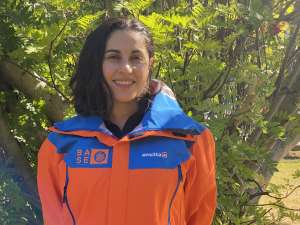
Doctoral researcher at the BASE Millennium Institute, Melisa Gañan. Photo: BASE Millennium I./ N. Politis

Thus, with the aim of drafting a governance proposal for the GBIF Chile network that allows the development, in its implementation, of a collaborative framework of community policies, agreements, norms and standards, systematic work has begun with researchers: “The results they will be proposed to interested parties to guide the exchange, publication, management and use of data on biodiversity in Chile”, points out Melisa Gañán, also a researcher at the University of Magallanes, of the Millennium Nucleus of Southern Invading Salmonids (INVASAL) and the Cape Horn International Center (CHIC).

The work also seeks to articulate the work of the different public and private representatives that provide Biodiversity data and determine how public policies in the country can be strengthened: “Before, anyone who wanted to be part of the collaborators could upload data, but now they You want to create a policy that protocolizes and shapes the data. What is published, how they impact and which ones could have priority”, says PhD. Claudia Maturana, also a researcher at the Institute of Ecology and Biodiversity (IEB) and the CHIC Center.

Attached researcher at the BASE Millennium Institute, Melisa Gañan. Photo: BASE Millennium I./ C. Barrientos

Thus, the Millennium Biodiversity Institute of Antarctic and Sub-Antarctic Ecosystems (BASE), the Millennium Nucleus of Southern Invading Salmonids (INVASAL), and the Institute of Ecology and Biodiversity (IEB) through the researchers Gañán and Maturana, will actively work on the table of governance to design an articulated operating structure. This structure, even with an initial development, “will make it possible to face challenges in terms of management and information on the country’s biodiversity”, both scientists emphasize, with research work in Santiago and Puerto Williams.

GBIF or Global Biodiversity Information Facility is an intergovernmental initiative that arises from the Organization for Economic Cooperation and Development (OECD), with the aim of creating an accessible information network on biodiversity, in order to facilitate and promote scientific research. The GBIF Chile Node is managed by the Ministry of the Environment (MMA) which, as a signatory entity, is responsible for its implementation.

The governance table is made up of representatives from public sector institutions, universities, scientific entities, the private sector, museums, non-governmental organizations and citizen science, all GBIF partners who must have experience in publishing biodiversity data. Specifically, this Board is made up of the Millennium BASE Institute, the University of Chile, the University of Magallanes, the Undersecretary of Fisheries and Agriculture (SUBPESCA), the National Forestry Corporation (CONAF), the Ministry of the Environment (MMA), Econativa Consultores, Cienciambiental Consultores, the Center for Applied Ecology and Sustainability (CAPES), Museum of Natural History, Museum of Zoology of the University of Concepción, and the NGO Alianza Zona Norte de Quilpué.

More information at https://gbifchile.mma.gob.cl/


By: Nadia Politis and Marcelo Sotomayor

Main photography: BASE Millennium I./ Claudia Maturana