The capital of the Los Ríos region becomes a crucial place for researching the resistance of Antarctic fish to hypoxia induced by climate change. Alaska researcher PhD. Kristin O’Brien and chilean researcher PhD. Luis Vargas-Chacoff are collaborating to find conservation responses and strategies to this challenge.

PhD. Kristin O’Brien University of Alaska Fairbanks (UAF). Photo: BASE Millennium Institute / A. Bertrand.

With 25 years of experience in Antarctic science, PhD. Kristin O’Brien, professor of biology at the University of Alaska Fairbanks (UAF), arrived in the city of Valdivia – located in the Los Ríos region, Chile – to work with the researcher from the Faculty of Sciences of the University Austral of Chile (UACh), BASE Millennium Institute and IDEAL Center. PhD. Luis Vargas Chacoff. The aim is to study the ability of Antarctic notothenioid fish and their ancestor, Eleginops maclovinus – also known as snook – to cope with hypoxia generated by climate change.

As temperatures rise, the oxygen level in the oceans decreases, and hypoxic events are becoming more frequent and severe in the world’s oceans. To understand how this phenomenon affects them, the research team has focused their attention on the snook, a species located in the Los Ríos region, and which is the closest ancestor to the most abundant group of fish in the Southern Ocean surrounding the frozen continent: the notothenioids.

“To accurately predict the impacts of climate change on Antarctic fish, it is important to understand the ability of their ancestor, E. maclovinus, to cope with climate change. In addition, because this fish has never inhabited the icy waters of the Southern Ocean, by comparing its biology to its Antarctic relatives, we can identify the traits that allowed Antarctic fish to adapt and thrive in their frigid environment”, explains PhD. Kristin O’Brien.

PhD. Luis Vargas-Chacoff and PhD. Kristin O’Brien working at Calfuco Coastal Laboratory UACh. By: BASE Millennium Institute / A. Bertrand.

Through experiments, the team is measuring the minimum amount of oxygen that these fish require to survive, as well as their physiological and biochemical ability to adapt. The research results are expected to show the ability of these animals to resist lack of oxygen as the ocean warms and may reveal new mechanisms to control hypoxia.

“We have different knowledge that complements each other. I highly value PhD. Vargas-Chacoff’s expertise in stress physiology, osmoregulation, and the immune system of fish. It brings to the project knowledge and experience that the other members of the group do not have so that we can better understand the ability of these animals to resist climate change”, says PhD. Kristin O’Brien, who is  also affiliated with the Institute of Arctic Biology at UAF.

PhD. Kristin O’Brien’s visit included the collection of samples and work at the Calfuco Coastal Laboratory, belonging to the Faculty of Sciences of the UACh. “I am tremendously grateful to PhD. Vargas-Chacoff, the Calfuco Coastal Laboratory and UACh for this opportunity to work with them. Daniela Nualart (PhD student in Aquaculture Sciences, BASE Millennium Institute scholarship) and Francisco Dann have been tremendously helpful and important members of our team while working here. We could not have completed our research without them”, she says.

Research team at Calfuco Coastal Laboratory UACh. By: BASE Millennium Institute / A. Bertrand.

For his part, the Doctor of Sciences, Luis Vargas-Chacoff, recently appointed director of the Graduate School of the UACh Faculty of Sciences, states that “the collaboration with PhD. O’Brien and her team is essential to understand how climate change affects Antarctic fish. Our combined knowledge will allow us to gain a more complete understanding. I am grateful for this opportunity to collaborate on such a crucial project for Antarctic science”.

“As a local researcher, I greatly value the opportunity to contribute to this work. Antarctic science is not only carried out in Antarctica itself; it is vital to recognize that regions such as Valdivia play a fundamental role in this field, being able to contribute with scientific and physiological knowledge of different biological models or native species that can be affected by global climate change”, adds the UACh doctoral student, BASE Millennium Institute and IDEAL Center, Daniela Nualart.

The project is funded primarily by the National Science Foundation (NSF) and also features UAF graduate student Augustus Snyder and PhD. Yangfan Zhang of Harvard University.


By: Constanza Barrientos Soto

Main image: Research team at Calfuco Coastal Laboratory UACh. By: BASE Millennium Institute / Antonia Bertrand


Five researchers from Punta Arenas, Valdivia and Santiago from the Millennium Institute Biodiversity of Antarctic and Subantarctic ecosystems (BASE) and the Universities of Magallanes, University Austral of Chile, and University of Chile, presented their scientific advances at the prestigious SCAR Biology Symposium held until the 4 August in the city of Christchurch.

Principal investigator Millennium Institute Biodiversity of Antarctic and Subantarctic ecosystems (BASE) and Laboratory of Antarctic and Subantarctic Genomics and Molecular Ecology Laboratory (LAGEMAS), Claudio Gonzalez-Wevar.

More than 300 researchers from 35 different countries, in the first SCAR face-to-face meeting in three years, they were exchanging advances and challenges in science in the city of Christchurch, New Zealand, until the 4 August 2023. The thirteenth version of the SCAR Biology Symposium presented a delegation from the Millennium Institute Biodiversity of Antarctic and Subantarctic ecosystems (BASE)

For the principal researcher of the BASE Millennium Institute, PhD. Claudio González-Wevar, the symposium is a key opportunity to present the latest results obtained from his Fondecyt 1210787 project, including new data on species from New Zealand, Antarctica and South America: “Among the most interesting results is that a species of Laevilitorina (Laevilitorina venusta) is distributed between Antarctica and Macquarie Island (Australia), making it one of the first examples of the same species found on both sides of the Polar Front”, he says.

The associate professor at the Institute of Marine and Limnological Sciences, Faculty of Sciences at the Universidad Austral de Chile, says his results suggest that “Laevilitorina venusta is a model species for physiological studies, as this lineage would have the ability to survive in Antarctic and sub-Antarctic environments. This is part of one of the project’s objectives, and Julia Saravia will develop her postdoctoral project in this area,” says González-Wevar.

PhD. Andrea Piñones, associate researcher Millennium Institute Biodiversity of Antarctic and Subantarctic ecosystems (BASE) and academic Universidad Austral de Chile

On the other hand, the associate researcher of the BASE Millennium Institute and oceanographer PhD. Andrea Piñones, presented the interaction between high frequency physical processes, such as coastal circulation and the impact of the tide, in the generation of biological hotspots in the South Shetland Islands: “Understanding how dynamic oceanographic processes are or could be generating favorable places for Antarctic marine organisms helps us to describe their current state”, says the also researcher of COPAS Coastal and IDEAL Center.

Representing the Chilean chapter of the Association of Polar Early Career Scientist (APECS), Phd. Claudia Maturana, researcher at the BASE Millennium Institute, will present the main results of her postdoc, linked to the connectivity of different populations of a freshwater crustacean (Branchinecta gaini): “We need to understand what the effective dispersal capacity of organisms is in order to predict changes in distribution in the face of the possible effects of climate change,” she says.

Sebastian Rosenfeld, doctoral researcher Millennium Institute Biodiversity of Antarctic and Subantarctic ecosystems (BASE).Vice President of the Association of Polar Young Researchers, APECS Chile, (Association of Polar Early Career Scientist, APECS).

Similarly, the doctoral researcher of the Millennium Institute BASE, CHIC and the GAIA Antarctic Research Center UMAG, Sebastian Rosenfeld, presented the results of his doctoral thesis focused on the global phylogeny of littorinid gastropods, research also conducted in the framework of his INACH project DG-10-22. Rosenfeld, is also Vice-President of ACPECS-Chile and researcher at the Universidad de Magallanes (UMAG), stresses the importance of communicating his research results: “I will show some of the new species we are describing, and also the scenarios we are proposing to explain the current diversity patterns of Laevilacunaria, Pellilitorina and Laevilitorina. In a context of climate change, it is very important to know in detail the biodiversity that currently inhabits Antarctic and Subantarctic environments,” he says.

Claudia Maturana, researcher attached to Millennium Institute Biodiversity of Antarctic and Subantarctic ecosystems (BASE).

Finally, the geneticist and researcher attached to the BASE Millennium Institute and Postdoctoral Fellow of the Austral University of Chile (UACh), Phd. Julia Saravia announced advances focused on two species of high-latitude fish: the notothenids Harpagifer bispinis (Diablito de los canales, sub-Antarctic), and Harpagifer antarcticus (Spiny Pillar) that inhabit Antarctica: “The increase in ocean temperatures due to global climate change combined with the intensification of human activity represents a great challenge for native fish of high latitudes”, says.

The XIII SCAR Biology Symposium took place from August 4, 2023 in New Zealand and brought together hundreds of researchers from all over the world, in matters of acclimatization, adaptation and resistance of Antarctic flora and fauna, ecosystem patterns and processes, molecular ecology, biogeography and biosafety among others. More information in https://www.confer.co.nz/scarbiology2023

Julia Saravia, researcher attached to Millennium Institute Biodiversity of Antarctic and Subantarctic ecosystems (BASE) and Postdoctoral fellow Universidad Austral de Chile (UACh).

SCAR (Scientific Committee on Antarctic Research), established in 1958, is an influential non-governmental organization composed of scientists from various disciplines. Its main objective is to promote, facilitate and coordinate worldwide scientific research in the Antarctic region. Adopting a collaborative approach, SCAR has become a fundamental pillar in advancing knowledge and understanding of the unique ecosystems and phenomena that characterize Antarctica.


Delegation of BASE Millennium Institute present at XIII SCAR Biology Symposium 2023, New Zealand (until august 4, 2023)

Complete program at: https://www.confer.co.nz/scarbiology2023/programme/

Dr. Claudio González-Wevar (Valdivia)

Principal investigator Millennium Institute Biodiversity of Antarctic and Subantarctic ecosystems (BASE) and Laboratory of Antarctic and Subanthartic Genomics and Molecular Ecology Laboratory (LAGEMAS). Academician of the Australian University of Chile (UACh) and researcher at the Center for Dynamic Research of Marine Ecosystems of High Latitudes (IDEAL).

Dr. Andrea Piñones (Valdivia)

Associate researcher Millennium Institute Biodiversity of Antarctic and Subantarctic ecosystems (BASE) and academic Universidad Austral de Chile and Institute of Marine and Limnological Sciences (UACh). Researcher of COPAS Coastal and Center for Dynamic Research of Marine Ecosystems of High Latitudes (IDEAL).

Dr. Claudia Maturana (Santiago)

Researcher attached to Millennium Institute Biodiversity of Antarctic and Subantarctic ecosystems (BASE) and Cape Horn International Center for Studies of Global Change and Biocultural Conservation, CHIC, (Cape Horn International Center). Member of the Board of Directors of the Association of Young Polar Researchers, APECS Chile, (Association of Polar Early Career Scientist, APECS).

Dr. Julia Saravia (Valdivia)

Researcher attached to Millennium Institute Biodiversity of Antarctic and Subantarctic ecosystems (BASE) and Postdoctoral fellow Universidad Austral de Chile (UACh). Researcher Laboratory of Antarctic and Subantarctic Genomics and Molecular Ecology (LAGEMAS) and Center for Dynamic Research of Marine Ecosystems of High Latitudes (IDEAL).

Sebastián Rosenfeld (Santiago-Punta Arenas)

Doctoral researcher Millennium Institute Biodiversity of Antarctic and Subantarctic ecosystems (BASE). Researcher University of Magallanes (UMAG), the GAIA Antarctic Research Center UMAG and the Cape Horn International Center for Studies of Global Change and Biocultural Conservation, CHIC, (Cape Horn International Center). Vice President of the Association of Polar Young Researchers, APECS Chile, (Association of Polar Early Career Scientist, APECS).


Main picture: (Names from left to right) PhD. Claudia Maturana, PhD. Sebastián Rosenfeld, PhD. Claudio González-Wevar, PhD. Andrea Piñones, and PhD. Julia Saravia

By: Carolina Gajardo and Nadia Politis

The project promoted from the Magallanes region by the Patagonian Institute of Cultural Studies (INPAEC), in collaboration with researchers from the BASE Millennium Institute, is now available on Spotify, Ivoox and the INPAEC YouTube channel.

“Bitácora Antártica” (Antarctic Logbook) is the name of the new scientific outreach podcast that seeks to reflect on Antarctica from the perspective of Anthropology, History, Science, Geology and Biodiversity. The proposal, promoted by the Patagonian Institute of Cultural Studies (INPAEC), and its director, Sociologist Silvio Reyes Rolla, seeks to discuss the Antarctic continent and its connection with people and knowledge, from a close, entertaining and reflective format: “We wanted to highlight Science as an agent of change that today is the protagonist of the great reflections of the future”, says Reyes, who is also a poet and cultural mediator.

Through 10 episodes of 40 to 50 minutes, researchers linked to Antarctica reflect on the challenges in the continent and how the Academy, Science and Civil Society work for its protection and awareness, a project in which the BASE Millenium Institute joined, with the participation of five of its researchers: PhD. Elie Poulin, PhD. Julieta Orlando, PhD. Juliana Vianna, PhD. Pablo Guerrero and PhD. Andrea Piñones.

Silvio Reyes Rolla is a Sociologist, Poet, Cultural Mediator and Director of the Patagonian Institute of Cultural Studies (INPAEC).¿

In chapter five, PhD. Andrea Piñones (BASE Millennium Institute, UACh, IDEAL, COPAS) reflects on ecogeographic elements of Antarctica and the so-called trophic chain (Premiere chapter: May 12, 2023). While in chapter six, PhD. Juliana Vianna (BASE Millennium Institute, PUC, CRG, Núcleo Milenio LILI) details the scientific work carried out with Penguins (Premiere chapter: May 15, 2023).

In chapter seven, PhD. Pablo Guerrero (BASE Millennium Institute, UdeC, IEB) gives details about his research on Antarctic plants (Premiere chapter: May 17, 2023), and on the other hand, chapter eight, PhD. Elie Poulin (Instituto Milenio BASE, Uchile) refers to pollution, invasive species and tourism developed in Antarctica (Premiere chapter: May 19, 2023). Finally, in chapter nine, PhD. Julieta Orlando (Instituto Milenio BASE, Uchile) reflects on Bioremediation and antibiotic resistance (Premiere chapter: 22 May 2023).

The podcast “Bitácora Antártica” (Antarctic Logbook), a popularization of history and science about the frozen continent and sub-Antarctic geography, is now available on Spotify, Ivoox and the INPAEC YouTube channel. The proposal has the musical collaboration of the Magellanic group Lluvia Ácida, with the song “Camino de la Ballena”, from the album Archipiélago Coloane. More information at https://www.inpaec.com/bitacora-antartica/

Chapters of “Antarctic Logbook”.

  1. History of Antarctic research. Phd Marcelo Leppe Chapter premiere: May 2, 2023
  2. Antarctic Treaty from the history. Rodrigo Santibáñez Chapter premiere: May 5, 2023
  3. Human condition of research in the Antarctic field. Anthropologist Florencia Vergara – Chapter premiere: May 8, 2023
  4. Geological conformation of Antarctica. Phd. Luis Jara Premiere episode: May 10, 2023
  5. Ecogeographic elements of Antarctica and the food chain. PhD. Andrea Piñones (BASE Millennium Institute – UACh – IDEAL – COPAS) Premiere chapter: 12 May 2023
  6. Penguins and Antarctic fauna. PhD. Juliana Vianna (BASE Millennium Institute – PUC -CRG – Millennium Nucleus LILI) Chapter premiere: May 15, 2023
  7. Antarctic flora. PhD. Pablo Guerrero (BASE Millennium Institute- UdeC) Chapter premiere: May 17, 2023
  8. Pollution, invasive species and tourism in Antarctica. PhD. Elie Poulin (BASE Millennium Institute – Uchile) Chapter premiere: May 19, 2023
  9. Bioremediation and antibiotic resistance. PhD. Julieta Orlando (BASE Millennium Institute – Uchile) Chapter premiere: May 22, 2023
  10. Last Patagonia; the expedition to Madre de Dios Island. Natalia Morata. Premiere episode: May 24, 2023


By Carolina Gajardo
Images: Patagonian Institute of Cultural Studies (INPAEC)

Punta Arenas, April 3, 2023.- Chinstrap penguins, during their reproductive period, feed almost exclusively on krill. But, what will happen to them if the availability of their main food is affected by environmental conditions such as rising temperatures, reduced sea ice and lower marine productivity? Will it negatively impact their populations, their reproduction and, consequently, in their young?

Some answers are contained in a recent study published in Scientific Reports, one of the most important science magazines on the planet, in which researchers from the Scientific Department of the Chilean Antarctic Institute (INACH), Francisco Santa Cruz, Lucas Krüger and César Cárdenas participated, these last two are also members of the Millennium Institute for Biodiversity of Antarctic and Sub-Antarctic Ecosystems (BASE).

Field works. INACH image.

The importance of this article lies in being one of the few works that directly relates food availability, feeding behaviors of a marine predator (chinstrap penguin) and evaluation of environmental parameters. “There are almost no studies linking in a synchronized manner the satellite tracking of marine predators, the acoustic abundance of krill, and satellite environmental information. Even more important is having achieved it during several consecutive campaigns; this allowed us to generate a time series with which we were able to answer key questions. Chile is one of the first countries to achieve this in Antarctica”, says Francisco Santa Cruz, one of the authors of the letter.

In simple words, everything is connected: the amount of sea ice influences the oceanic primary productivity when it melts in spring-summer and, consequently, there is less availability of krill that chinstrap penguins feed on. “The penguins in the study area have adapted in such a way that they synchronize the birth of their chicks with these increases in productivity that are more or less cyclical and predictable. When environmental variations cause oceanic productivity peaks to change in space or time, penguins are probably not able to maintain the same chick survival rates. This is what our results indicated for the colony we have studied”, explains Dr. Lucas Krüger, a specialist in Antarctic birds.

To reach these conclusions, different sampling techniques were combined, such as transects in the INACH Karpuj scientific boat, penguin tracking with GPS devices and TDR depth sensors, as well as aerial photographs taken with a drone. “Thanks to scientific platforms such as Karpuj, we have been able to collect important acoustic data on krill, in order to be able, together with satellite data, to help understand bird feeding patterns and how these are influenced by the environment in the face of changes in krill availability. ”, expressed Dr. César Cárdenas.

The work focused specifically on Punta Armonía, Nelson Island (South Shetland Islands) in the INACH Antarctic Scientific Expeditions of the years 2019-2020 (ECA 56) and 2021-2022 (ECA 58). On the island there is a Specially Protected Antarctic Zone (ASPA), where the environment is protected from human presence in activities such as tourism and intensive research. “In this case, we only focused on Nelson Island, because it is the site where we have been monitoring since 2019, we also took acoustic data to estimate the abundance off the island, which helped to carry out a more complete study that did not it only includes the satellite tracking of the birds”, mentions Cárdenas.

Preliminary results indicate that this population has been reduced by more than half, following the reduction values that were presented in another study, but it remains an important colony of chinstrap penguins in the South Shetland Islands.

In this sense, the study that has just been published is connected to other previous research published by Krüger at the beginning of March, where it is suggested that the increase in the frequency of years of low krill availability due to the increase in winter temperatures , could eventually explain the population trends that are verified in the northernmost areas of the Antarctic peninsula. However, it will be necessary to verify if this phenomenon is repeated in more colonies for this hypothesis to be accepted.

The importance of Marine Protected Areas

For Dr. César Cárdenas, this study is a new piece to the puzzle of the work carried out in the INACH Marine Protected Areas Program and also the annual monitoring that has been carried out at Punta Armonía since 2019. This type of study highlights the importance of protecting The antartica. “The environment is changing, so it is necessary to improve our knowledge of how organisms behave and how they are affected by environmental changes, which will increase in the future according to climate change projections,” he points out.

These INACH researchers are working on a proposal for a Marine Protected Area (AMP) for Domain 1 (Antarctic Peninsula), a tool for ocean conservation and to safeguard biodiversity and manage fisheries, while restoring and preserving the ecosystem function, which is strongly challenged by climate change.

Francisco Santa Cruz and Lucas Krüger in INACH’s Karpuj boat. INACH image.

The MPA for Domain 1 is critical to prevent another driver of krill decline, such as fisheries, from having an additional impact, eventually reducing the ability of chinstrap penguins to adapt to changes in their environment. For example, in periods of low krill availability, fisheries could prevent them from being caught and still available to penguins.

Nuria Salmerón and Solenne Belle also participated in the scientific article “Environmental changes generate less availability of Antarctic krill, affecting the reproduction of chinstrap penguins in the Antarctic Peninsula”, who completed their master’s thesis in 2022 at INACH by the International Master of Science in Marine Biological Resources (IMBRSea), from the University of Ghent, Belgium. As authors, the contribution of Nicolás Alegría from the Fisheries Research Institute (Inpesca), Júlia Gronmann Finger, Denyelle Hennayra Cora and María Virginia Petry from the Ornithology and Marine Animals Laboratory of the University of Vale do Rio dos Sinos (UNISINOS) and Cristina Hernandez from the University of Magallanes.


By: Chilean Antarctic Institute (INACH)

Main image: Francisco Santa Cruz

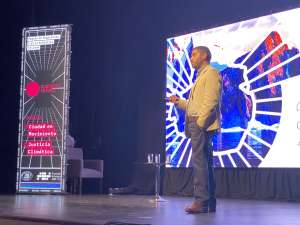
Strengthening knowledge about Climate Change, antarctic biodiversity, together with promoting its visibility through public advocacy, were part of the reflections addressed by the researcher from the Chilean Antarctic Institute (INACH) and the Millennium Institute Biodiversity of Antarctic Ecosystems and Subantarctic (BASE), PhD. César Cárdenas, in Congreso Futuro 2023 in Punta Arenas.

Punta Arenas, January 17, 2023-. With the themes “City in motion” and “Climate justice”, a new version of the Congreso Futuro 2023 began in the Magallanes region, a meeting led by the Senate of the Republic of Chile, and the Encuentros del Futuro foundation.

Regional ministerial secretary CTCI Austral Macrozone, Verónica Vallejos; INACH Director, PhD. Marcelo Leppe, Undersecretary of CTCI, PhD. Carolina Gainza; Catriona McKinnon; Katrina Johnston; PhD. Cesar Cardenas; and President of Prisma austral, Marcelo Agüero. Picture: Millennium I. BASE/ C. Barrientos

Under the motto #SinLimiteReal, exhibitors and attendees met at the Claudio Paredes Chamorro Cultural Center in Punta Arenas, after an inauguration led by the Undersecretary of Science, Technology, Knowledge and Innovation (CTCI), PhD. Carolina Gainza Cortés, the Regional Governor of Magallanes, Jorge Flies, the National Director of the Chilean Antarctic Institute (INACH), PhD. Marcelo Leppe, the Rector of the University of Magallanes (UMAG), José Maripani, and the Research Director of UMAG, Marcelo Navarrete.

Together with PhD. Katrina Johnston-Zimmerman, a researcher, educator, and leader in applied anthropology from Philadelphia (United States), and PhD. Catriona Mckinnon, a professor of Political Theory at the University of Exeter (United Kingdom), the principal investigator from the Millennium Institute BASE, also the Chilean Antarctic Institute (INACH), PHD. César Cárdenas joined the reflection on Climate Change, Antarctica and public advocacy: “It is super important that people have live access, since the Future Congress is the most important instance that we have in the dissemination of Science, with the possibility of listening to speakers from all over the world, and sharing different types of presentations from different areas of knowledge”, he pointed out.

Cárdenas, PhD in Marine Biology and scientific diver, addressed the impact of Climate Change in Antarctica, and the importance of transmitting scientific knowledge to people and decision makers: “It is time to act: to strengthen the link between science, public policies, which require conversations between all parties such as scientists, politicians, industry and civil society”, he highlighted.

PhD. César Cárdenas in Congreso Futuro. Picture of: Millennium I. BASE/ C. Barrientos

Finally, the researcher from the Millennium Institute BASE underlined the role of international institutions such as the Convention for the Conservation of Antarctic Marine Resources (CCRVMA- CCAMLR): “There are a series of changes that are taking place, and where the projections say that they will have greater consequences in the polar environment. Therefore, it is not only necessary to stay in the generation of knowledge, it is important to reach decision makers, authorities, the world of politics. That they are capable of absorbing this information and that it becomes decisions”.

The Congreso Futuro is an instance organized by the Senate of the Republic of Chile and Encuentros del Futuro Foundation. In its version in the Magallanes and Chilean Antarctic region, it had the support of the Ciencia Pública program of the Ministry of Science, Technology and Innovation, the Regional Government, the Illustrious Municipality of Punta Arenas, the Chilean Antarctic Institute (INACH), the University of Magallanes (UMAG) and the Prisma Austral Foundation.

[VIDEO] Check the presentation of PhD. César Cárdenas here:

By: Direction of Communications BASE Millennium Institute

Main picture: PhD. César Cárdenas in Congreso Futuro. Picture of: Millennium I. BASE/ C. Barrientos

The depletion of the ozone layer and its effects on human health and ecosystems was the focus of the Environmental Effects Assessment Panel (EEAP) carried out within the framework of the 35th anniversary of the Protocol of Montréal.

This year, the EEAP was promoted by the Ozone Secretariat of the United Nations Environmental Program (UNEP), and was held from September 19 to 27 in Kalmar, Sweden. It featured a panel of experts, including the researcher from the University of Magallanes, attached to the Cape Horn International Center and the BASE Millennium Institute, Dr. Roy Mackenzie and, the postdoctoral researcher from the University of Magallanes and the Millennium Institute BASE, Dr. Brenda Riquelme del Río.

The Panel brought together professionals with extensive experience in the effects of ozone layer depletion on human health, ecosystems, atmospheric chemistry, ecology, materials engineering, among others. “We were asked to examine the UNEP-EEAP report that will be reviewed on the 35th anniversary of the Montreal Protocol and to participate in the discussion of the impact of this treaty on climate care and conservation of ecosystems and biodiversity,” said Roy Mackenzie.

Regarding the Montreal protocol, the researcher attached to the BASE Millennium Institute indicated that “it has been very effective in protecting the planet’s stratospheric ozone layer and preventing the global increase in UV-B solar radiation on the Earth’s surface. Consequently, this international treaty has prevented the large-scale detrimental effects of high UV-B radiation on agricultural productivity, terrestrial organisms, and ecosystems (…) Thanks to this treaty, the Antarctic ozone hole is expected to close around the 2070s.”

Affiliated researcher Millennium Institute BASE, Dr. Roy Mackenzie, and postdoctoral researcher Millennium Institute BASE, Dra. Brenda Riquelme.

For years, Roy Mackenzie and Brenda Riquelme have focused their efforts on sensorizing and monitoring the moss Polytrichum strictum (Polytrichaceae), conducting experiments in response to the manipulation of UV-A and UV-B light, both in the field and in the laboratory. They have developed a working method in Omora Park, on the north coast of Navarino Island, with the aim of establishing long-term monitoring of bryophytes as indicators of environmental variability in the subantarctic zone of Magallanes.

“Our results on the effect of UV radiation on subantarctic bryophytes will continue to contribute to the quadrennial reports generated by the EEAP-UNEP panel, taking part of a global database that will favor evidence-based decision-making for the countries that are  part of the Montreal treaty,” said Roy Mackenzie, also an ecologist at the BASE Millennium Institute.

For her part, Dr. Brenda Riquelme del Río expressed that “receiving the invitation to be part of the review of the report has been tremendously gratifying and challenging, we have taken it as a recognition for our contribution in the study of the effects of the ozone hole on plants from Puerto Williams, the southernmost city on the planet”.

You can learn more about the conference here.

By: Constanza Barrientos

Main photography: image retrieved from the Linnaeus University website in Sweden