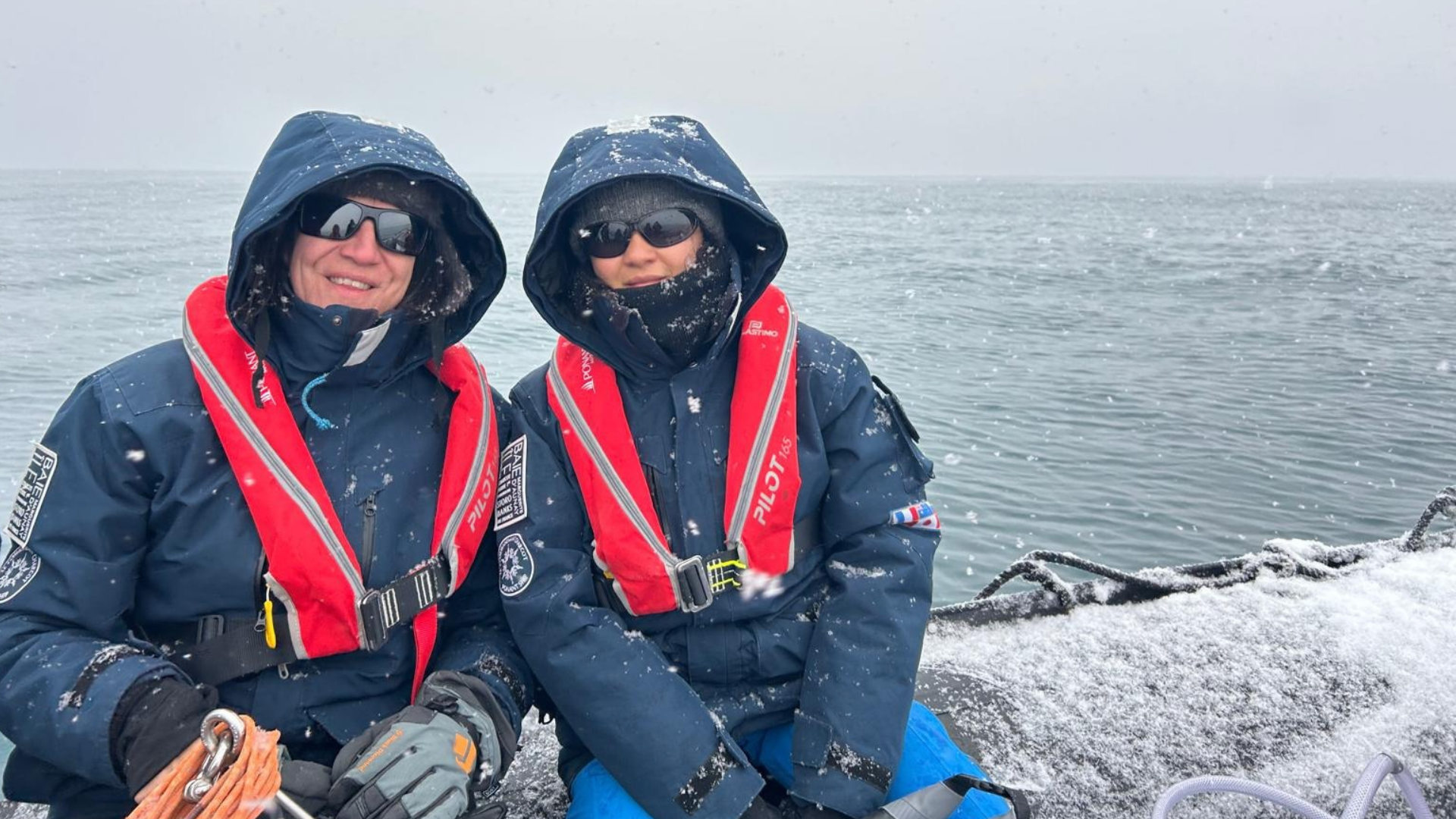
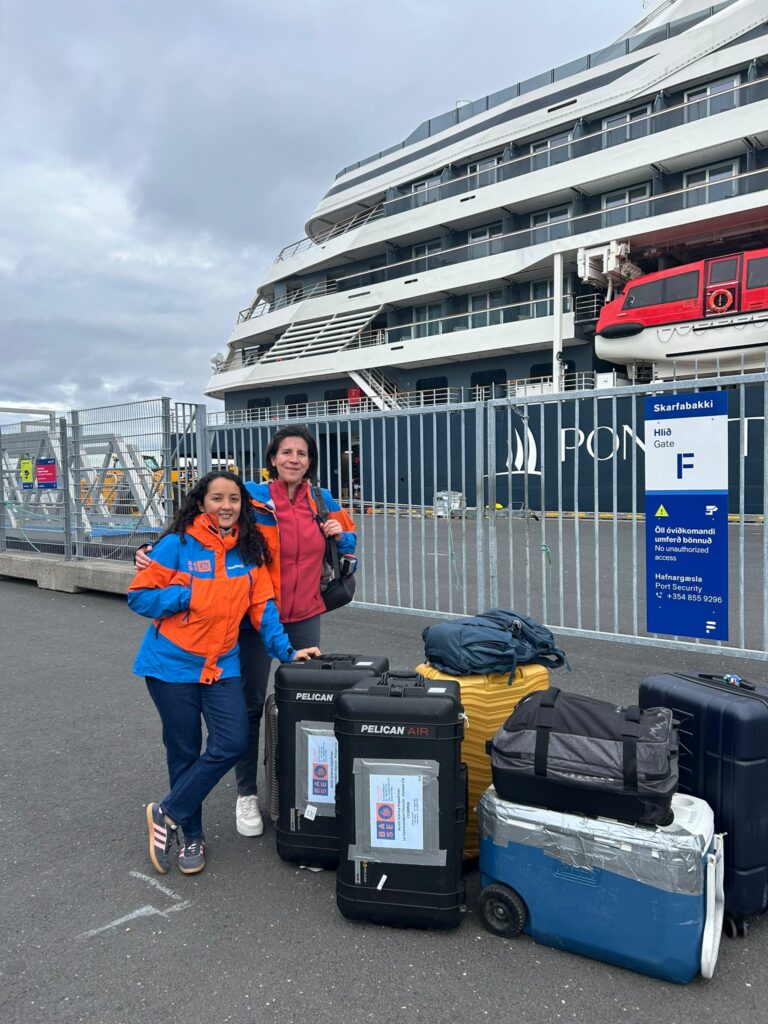
Until October 14, two women scientists from the BASE Millennium Institute will take part in a new scientific expedition to the Arctic Ocean. The third campaign will travel from Iceland to northeastern Greenland, including the Svalbard archipelago and Tromsø, Norway. The expedition aims to collect new data on microbial communities, environmental gradients, and the methane cycle.
Against the backdrop of climate change and the global biodiversity crisis, studying the rapidly changing polar oceans provides valuable insights into how microorganisms respond to different environmental conditions. This challenge has brought together national and international institutions through the Millennium Institute for Antarctic and Sub-Antarctic Ecosystem Biodiversity (BASE) to study what is known as “less visible biodiversity” and its important role in biogeochemical processes, particularly the methane cycle.
Thus, scientists Dr. Léa Cabrol and doctoral researcher MSc Nayla Serey have embarked on a new expedition aboard the icebreaker Le Commandant Charcot, operated by French company PONANT EXPLORATIONS. The expedition will build on the scientific record gathered during previous campaigns in Arctic and Antarctic waters, while providing new insights into the microbial communities that inhabit these waters.
“We have an extensive record of the Arctic and Antarctic oceans, and this new expedition will allow us to build on it by incorporating areas we have not previously been able to study and increasing the resolution of our sampling. We will also have the opportunity to compare the same geographic area at two different points during the summer season,” says Dr. Léa Cabrol, a researcher at the BASE Millennium Institute.
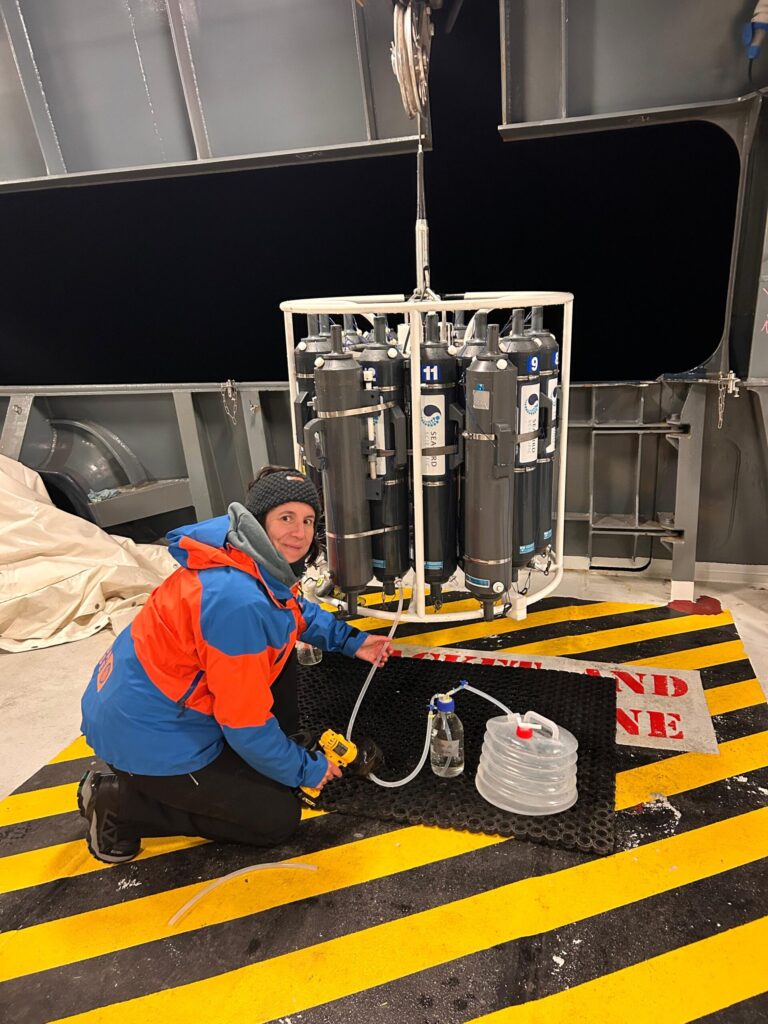
The 2026 campaign will build on two previous Arctic expeditions. The first took place in 2024, with a route toward the North Pole, while in 2025 the team sailed from Reykjavík to northeastern Greenland. This time, the expedition will depart from Iceland, continue toward northeastern Greenland, and pass-through Svalbard before concluding in Tromsø, Norway.
The new route will expand the geographic coverage of the sampling effort and include areas that could not be studied during the previous campaign. In particular, it will cross several oceanographic fronts—zones where the physicochemical properties of the water, such as temperature, salinity, and nutrient concentrations, change dramatically over just a few kilometers. These areas serve as key natural laboratories for better understanding how environmental change affects the marine microbial world.
During the expedition, the scientists will continuously collect surface seawater samples and also sample water at different depths using the oceanographic equipment available on board. They will also have access to sea-ice platforms, allowing them to study the microorganisms living in the ice and in the water beneath it as the ice melts. On board, the scientists will use the ship’s laboratories to process the samples, filter water, and measure dissolved methane.
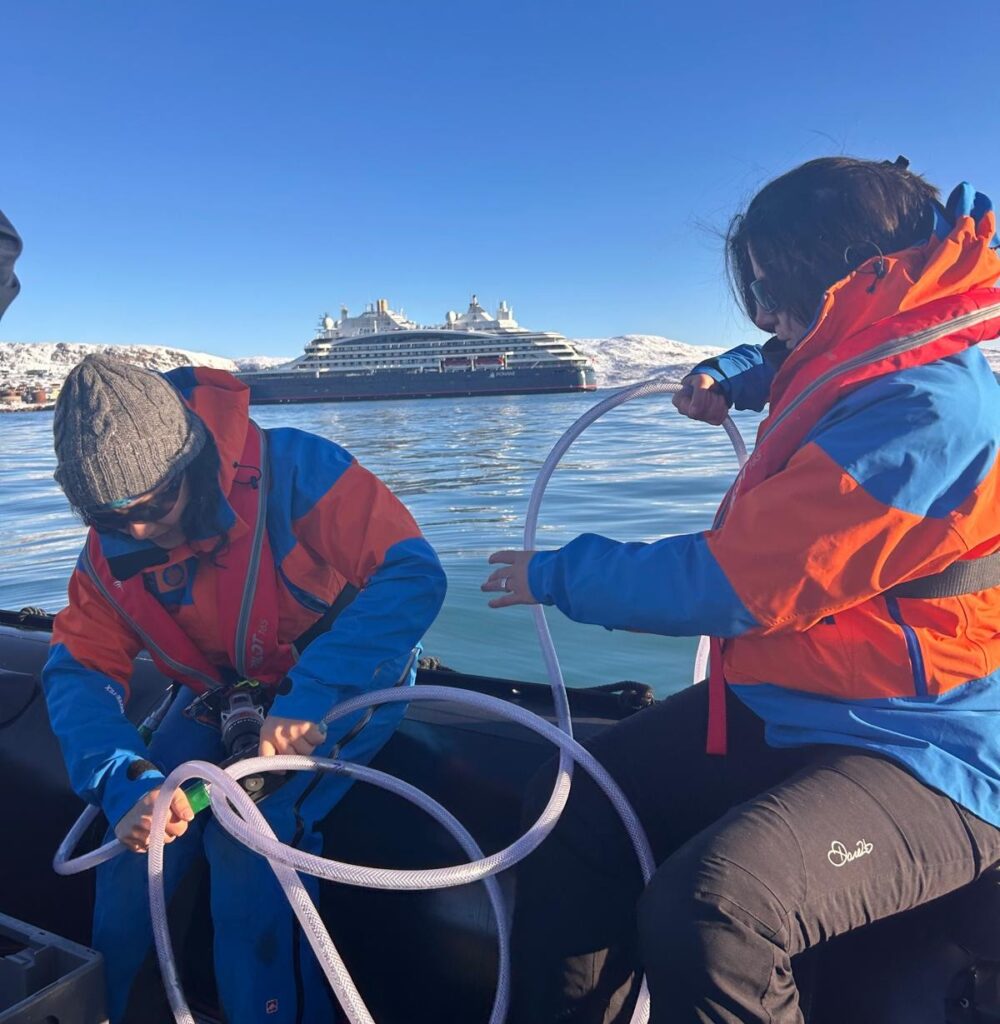
Back in their laboratory in Santiago, Chile, the scientists will extract genetic material from the samples to study the composition and function of microbial communities using next-generation sequencing. The data collected during the expedition will also contribute to Nayla Serey’s doctoral research, adding new observations on microbial communities and their relationship with environmental conditions. In this way, the campaign will add a new dataset to the record established during the 2024 and 2025 expeditions, allowing the team to continue investigating how these parameters vary across the Arctic Ocean.
“Taking part in a new Arctic expedition is a privilege as an early-career researcher. Our scientific data are the result of international collaborative work, and I believe they can make a significant contribution to my doctoral thesis”, says Nayla Serey. Her thesis, “Prokaryotic Communities Associated with the Methane Cycle in Polar Oceans: Diversity, Functional Potential, and Response to Environmental Change,” developed in collaboration with Dr. Léa Cabrol and Dr. Julieta Orlando, examines how microbial communities respond to environmental changes in the polar oceans and how these changes influence their role in the methane cycle in these regions.
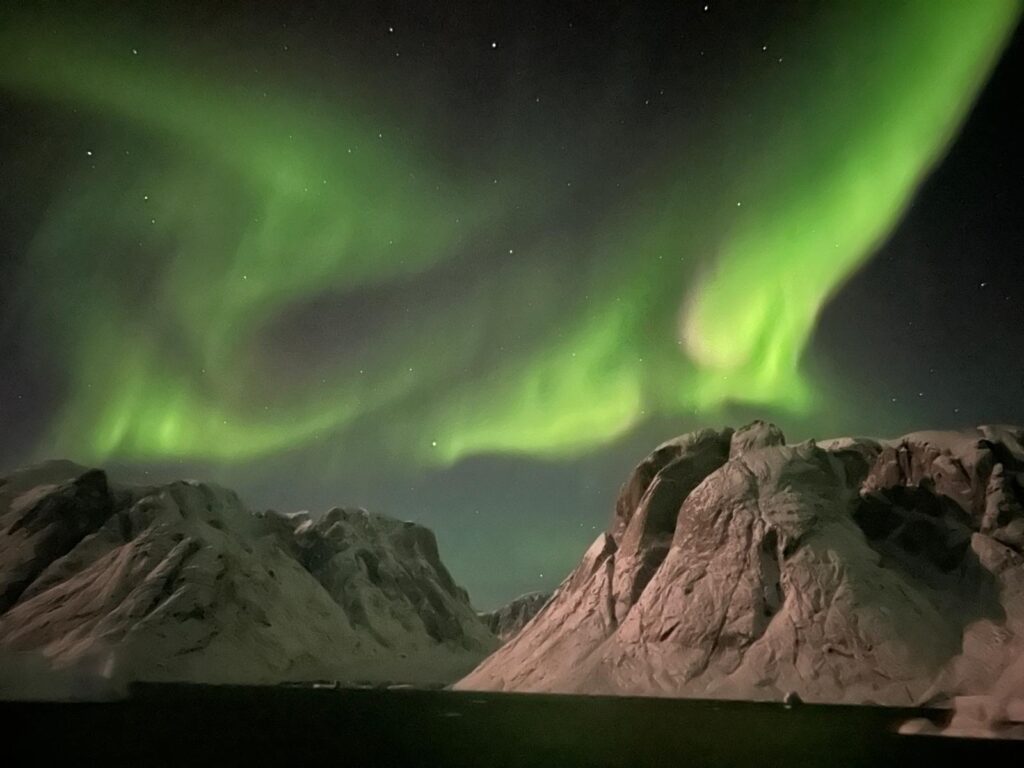
The temporal comparison will be one of the key elements in complementing the data collected in 2024 and 2025. While those expeditions took place at the beginning of the summer season, the 2026 campaign will be conducted later in the season. “Even when sampling takes place in similar geographic areas, environmental conditions can vary depending on the time of year when the samples are collected,” the scientists explain.
A vital scientific connection
The study region encompasses a connection between the Arctic and Atlantic oceans, where fronts form as different water masses interact. In these areas, the team will be able to observe variations in parameters such as temperature, salinity, and nutrient concentrations, and examine how these environmental gradients relate to the composition and distribution of microbial communities. To this end, samples will be collected for microbiological analyses, while methane measurements will be carried out using specialized equipment.
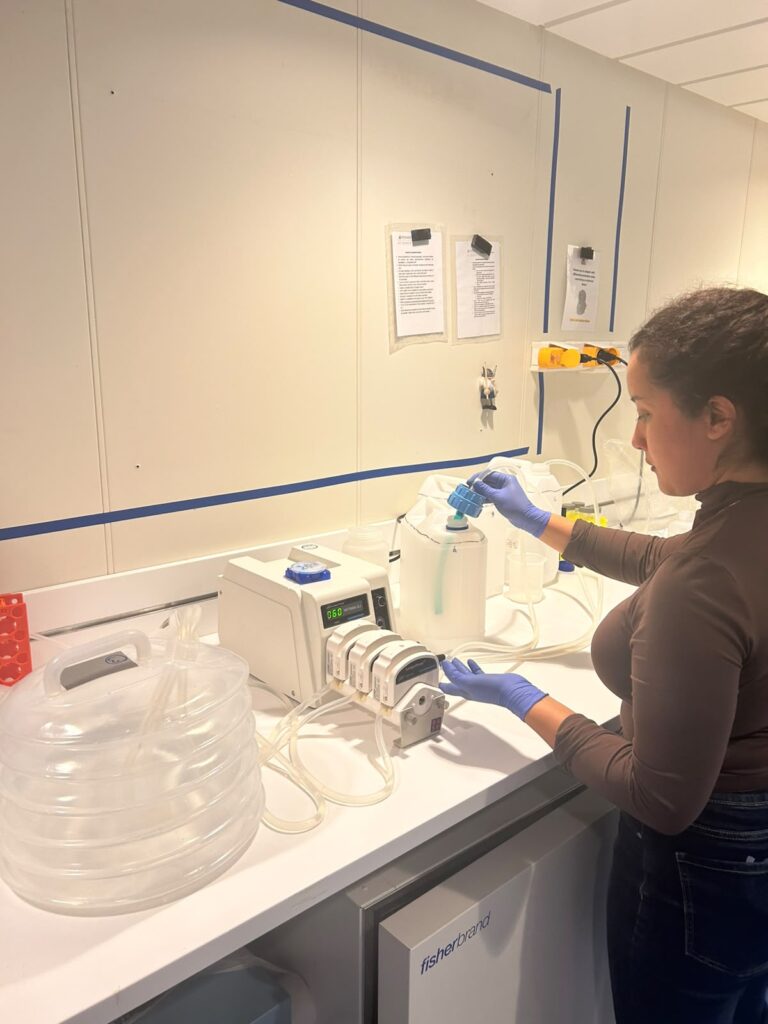
“We want to study how microbial communities vary along these environmental gradients in the polar oceans and how they are linked to the methane cycle. The new sampling sites will allow us to complement the information we already have and observe these variations across a broader geographic scale,” Nayla Serey emphasizes.
Methane is a potent greenhouse gas whose atmospheric concentration has increased exponentially over the past century. Microorganisms are primarily responsible for both its production and consumption, acting as key regulators of the global climate. The role of the ocean as a source or sink of methane is not yet fully understood, particularly in highly dynamic polar regions such as the Arctic and Southern oceans. It is therefore critical to assess the methane emission and uptake potential of these oceans across broad environmental gradients and over multiple years, and to identify the microorganisms that regulate this cycle.
The expedition is taking place against a backdrop of changes observed across different components of the Arctic system. According to the Arctic Report Card 2025, published by the U.S. National Oceanic and Atmospheric Administration (NOAA), sea surface temperatures in nearly all ice-free regions of the Arctic Ocean during August have shown an increasing trend since 1982, with an average rise of approximately 0.3°C per decade north of 65°N.
This third Arctic oceanographic campaign by the BASE Millennium Institute strengthens comparative research across the two polar oceans and expands the presence of Chilean science in international polar research.
Source and photographs: Communications Office, BASE Millennium Institute, Chile.