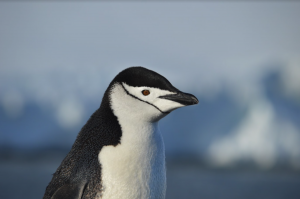
Punta Arenas, March 1, 2023.- Nearly 60% of the world population of chinstrap penguins (Pygoscelis antarcticus) reproduce in the Antarctic Peninsula and its northernmost maritime islands (South Shetland Islands and Orkney Islands), an emblematic species of the White Continent that has experienced a dramatic decline of about 30% of its population in just three generations.

This categorical data is part of a study carried out by the researcher of the Chilean Antarctic Institute (INACH) and the Millennium Institute BASE, PhD. Lucas Krüger and recently published by the specialized magazine Diversity, where it also reveals that in a period of 40 to 50 years , 62% of the colonies (groups of penguins) suffered declines greater than 50%.

He also warns that these conditions already mentioned (30% decrease in three generations), would place it in the category of vulnerability to extinction, according to the criteria used by the International Union for Conservation of Nature.

To carry out this elaborate analysis, standardized records and counts of penguins in the Antarctic peninsula for six decades (since 1960) were studied. Likewise, since 2017, an international group of scientists has been dedicated to compiling all the existing information and making it available on a free access platform that is updated every year and that is on the website: https://www. .penguinmap.com/ 

Photography: Chilean Antarctic Institute (INACH)


Possible causes of the decrease

The dramatic levels of decline in these populations are added to the fact that the suspected causes are probably not reversible in the short or medium term.

For the rest, there is some controversy in the scientific community regarding the factors that may be leading to the decline in chinstrap penguin populations. Recent evidence suggests that “the most likely reason is the spatiotemporal change in krill abundance in the northern part of the Antarctic Peninsula due to warming and winter sea ice retreat. It is also probable that other factors act together, mainly associated with climate change, affecting the survival of the nestlings in the breeding colonies and of the juveniles in their first year of life”, declares Lucas Krüger.

Other relevant hypotheses are related to the recovery of whale populations, which are also important consumers of Antarctic krill, in addition to the increase in krill fisheries in Antarctica. “These factors could have contributed to population dynamics, although evidence suggests this could only occur when there are years of low krill abundance”, he adds.

Photography: Chilean Antarctic Institute (INACH)


Projections

The INACH researcher explains that the models that have projected changes in the ecosystem of the Antarctic Peninsula in the face of different environmental scenarios indicate that current decline trends should be followed up.

“But at the same time, it is complex and difficult with the current knowledge that is available, to give an accurate estimate of the future of the species. For now, we can say that in the recent past the populations have declined considerably, and could be put at risk if the trends continue. Better understanding how this species relates to rapid environmental changes in the Antarctic Peninsula is critical,” he says.

The Antarctic Peninsula is one of the areas of the planet that has suffered the most rapidly from the effects of global warming in recent years and these changes are of great concern to scientists around the world.

The INACH is a technical body of the Ministry of Foreign Affairs with full autonomy in everything related to Antarctic matters of a scientific, technological and dissemination nature. INACH complies with the National Antarctic Policy by encouraging the development of excellent research, effectively participating in the Antarctic Treaty System and related forums, strengthening Magallanes as the gateway to the White Continent and carrying out actions to disseminate Antarctic knowledge among citizens. .


Text and images: Chilean Antarctic Institute (INACH)

Within the framework of the International Day of Women and Girls in Science, declared every February 11 by the United Nations, both organizations joined the Millennium Institute BASE to reflect on biodiversity research, gender equality and the role of girls and adolescents in public advocacy.


Santiago, February 10, 2023.- Through the campaign #TremendasCientíficas #11F Fundación Tremendas, the Regional Office of Education for Latin America and the Caribbean (OREALC/UNESCO Santiago) and the Millennium Institute BASE came together to reflect on gender equity, science, and the role of young people and girls in public advocacy.

Through the questions “Why is it important that girls/women are interested in the study of Austral biodiversity?” and “Why is the education of girls and adolescents in science key to motivating the participation of women in STEM?”, throughout February reflections and views of scientists, young people and girls will be shared through the social networks of the three institutions. .

For Dr. Julieta Orlando, alternate director of the Millennium Institute BASE, making visible the diversity of women’s perspectives on research enriches reflections on scientific work: “It is increasingly important that we be able to know different points of view, different disciplines and approaches to science. In the case of our Millennium Institute BASE, we have a significant percentage of researchers from Puerto Williams, Punta Arenas, Valdivia, Concepción and Santiago focused on Antarctic and sub-Antarctic biodiversity”, she affirms.

For her part, María Ignacia Aybar, executive director of Fundación Tremendas, comments on the relevance of generating alliances that promote the participation of girls and women in science: “It is very important that girls meet other referents and that they themselves are inspired by to others to pursue scientific careers. Education is essential to reduce gender gaps and this collaboration aims at that”, she points out.

In 2015, the United Nations General Assembly declared February 11 as the International Day of Women and Girls in Science in recognition of the key role women play in the scientific and technological community. Thus, each year it seeks to make women scientists visible and support, along with promoting the access of women and girls to education, training and research in the fields of science, technology, engineering and mathematics.

The Instituto Milenio Biodiversidad de Ecosistemas Antárticos y Subantarcticos (Millennium Institute Biodiversity of Antarctic and Subantarctic Ecosystems) is a center of excellence dependent on the National Agency for Research and Development of Chile (ANID) that seeks to generate cutting-edge scientific knowledge, along with training young people researchers and researchers around the biodiversity of Antarctic and sub-Antarctic ecosystems. More information at https://institutobase.cl


By: Nadia Politis and Sara Vidal

Photography: I. Milenio BASE/N.Politis

The student from the Catholic University of Chile, Eduardo Pizarro, was selected by the International Association of Antarctic Tour Operators (IAATO) to carry out his research at the National Museum of Natural Sciences (MNCN) in Madrid.

February 2, 2023, Santiago. – The IAATO Antarctic Fellowship 2022, from the International Association of Antarctica Tour Operators, was awarded to the student of the Catholic University of Chile and master’s researcher of the Millennium Institute Biodiversity Institute of Antarctic and Subantarctic Ecosystems (BASE), Eduardo Pizarro. The scholarship includes a three-month internship at the National Museum of Natural Sciences (MNCN), Spain, to continue developing his research on Antarctic penguins.

The objective of the researcher at the Molecular Biodiversity Laboratory is to investigate the changes in distribution and abundance of Antarctic penguins affected by global change, through the study of different ecological niche modeling approaches. “This scholarship allows us to contribute to the investigation of Antarctic ecosystems and their response to global change, which is one of the objectives set by the BASE Millennium Institute,” he said.

“I am very happy to receive the support of IAATO, this scholarship is a recognition of the excellent work that we are doing in the Laboratory of Molecular Biodiversity and in the BASE Millennium Institute for the investigation of Antarctic ecosystems. This opportunity means growth in my career as a young researcher, by giving me the opportunity to carry out the research project that I developed with the guidance of Dr. Juliana A. Vianna”, expressed the UC student.

Eduardo Pizarro started his project under the tutelage of the expert in biological conservation and Molecular ecology, Dr. Juliana A. Vianna, principal investigator of the Molecular Biodiversity Laboratory and the BASE Millennium Institute. During his internship, he will have the guidance of Dr. Pedro Aragón, senior researcher at the MNCN, and Dr. Luis Pertierra, researcher at the University of Pretoria in South Africa.

More information about the IAATO Antarctic Fellowship here.


By: Constanza Barrientos

Through the Latin American Student Membership Grant for the Wildlife Disease Association, the Wildlife Disease Association, WDA (Wildlife Disease Association) recognized the Master’s student in Natural Resources and attached researcher at the Millennium Institute Biodiversity of Antarctic Ecosystems and Subantarctic (BASE) Claudia Ulloa, among more than 75 applicants.

A membership scholarship aimed at promoting and promoting research in Latin America, together with positioning Latin American researchers internationally, is the objective of the Latin American Student Membership Grant for the Wildlife Disease Association, which recognized the Veterinary Doctor and Master’s student in Natural Resources from the Pontificia Universidad Católica, Claudia Ulloa, as one of its beneficiaries.

Ulloa, also a member of the UC Molecular Biodiversity Laboratory directed by Dr. Juliana Vianna, points out that the scholarship allows the creation of contact networks with researchers from all over the world, who are developing issues related to diseases in wildlife: “also I will be able to attend this year’s International Congress, in order to present the results of my master’s research, as well as access funds that allow me to develop my research ideas this year”, he says.

Researcher affiliated to the Millennium Institute BASE, Claudia Ulloa. Picture: I. Millennium BASE/C. Barrientos

After the success of the call for the program, and with more than 75 applications, the selection results brought a long-awaited news to Claudia Ulloa, who says that she is happy to know that the effort and passion she has dedicated to her formative years is bearing fruit. : “My trajectory and the results I have obtained are recognized. This motivates me to continue researching for the conservation of wildlife, and to continue creating and working on research projects, now together with the Millennium Institute BASE”, she affirms.

Regarding future links, Claudia emphasizes that her membership of the Bioethics Committee of the Millennium Institute BASE will allow her to make contact with international researchers with extensive experience in the management and well-being of wildlife from different taxonomic groups: “I will be able to make available the new updates and international standards, along with jointly finding the best options and establishing high-standard local management and biosecurity protocols. This, in a context of increasing zoonotic diseases (transmitted from animals to humans) and outbreaks of diseases in wildlife, research with wildlife must maintain high biosafety standards in order to reduce the risks of contagion. or transmission of diseases in humans and between animals”, he says.

The mission of the Wildlife Disease Association is to promote healthy wildlife and ecosystems, biodiversity conservation, and environmentally sustainable solutions to One Health challenges.

More information about the Latin American Student Membership Grant, part of the Latin American Student Membership Grant for the Wildlife Disease Association here: https://www.wdalatinoamerica.org/beca-membresia-estudiantes/


By: Nadia Politis

Main picture: Claudia Ulloa in Antarctica, within the framework of ECA 59 of INACH (2023).

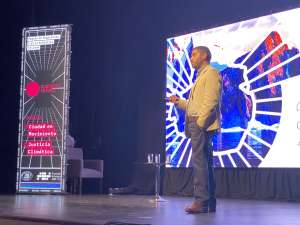
Strengthening knowledge about Climate Change, antarctic biodiversity, together with promoting its visibility through public advocacy, were part of the reflections addressed by the researcher from the Chilean Antarctic Institute (INACH) and the Millennium Institute Biodiversity of Antarctic Ecosystems and Subantarctic (BASE), PhD. César Cárdenas, in Congreso Futuro 2023 in Punta Arenas.

Punta Arenas, January 17, 2023-. With the themes “City in motion” and “Climate justice”, a new version of the Congreso Futuro 2023 began in the Magallanes region, a meeting led by the Senate of the Republic of Chile, and the Encuentros del Futuro foundation.

Regional ministerial secretary CTCI Austral Macrozone, Verónica Vallejos; INACH Director, PhD. Marcelo Leppe, Undersecretary of CTCI, PhD. Carolina Gainza; Catriona McKinnon; Katrina Johnston; PhD. Cesar Cardenas; and President of Prisma austral, Marcelo Agüero. Picture: Millennium I. BASE/ C. Barrientos

Under the motto #SinLimiteReal, exhibitors and attendees met at the Claudio Paredes Chamorro Cultural Center in Punta Arenas, after an inauguration led by the Undersecretary of Science, Technology, Knowledge and Innovation (CTCI), PhD. Carolina Gainza Cortés, the Regional Governor of Magallanes, Jorge Flies, the National Director of the Chilean Antarctic Institute (INACH), PhD. Marcelo Leppe, the Rector of the University of Magallanes (UMAG), José Maripani, and the Research Director of UMAG, Marcelo Navarrete.

Together with PhD. Katrina Johnston-Zimmerman, a researcher, educator, and leader in applied anthropology from Philadelphia (United States), and PhD. Catriona Mckinnon, a professor of Political Theory at the University of Exeter (United Kingdom), the principal investigator from the Millennium Institute BASE, also the Chilean Antarctic Institute (INACH), PHD. César Cárdenas joined the reflection on Climate Change, Antarctica and public advocacy: “It is super important that people have live access, since the Future Congress is the most important instance that we have in the dissemination of Science, with the possibility of listening to speakers from all over the world, and sharing different types of presentations from different areas of knowledge”, he pointed out.

Cárdenas, PhD in Marine Biology and scientific diver, addressed the impact of Climate Change in Antarctica, and the importance of transmitting scientific knowledge to people and decision makers: “It is time to act: to strengthen the link between science, public policies, which require conversations between all parties such as scientists, politicians, industry and civil society”, he highlighted.

PhD. César Cárdenas in Congreso Futuro. Picture of: Millennium I. BASE/ C. Barrientos

Finally, the researcher from the Millennium Institute BASE underlined the role of international institutions such as the Convention for the Conservation of Antarctic Marine Resources (CCRVMA- CCAMLR): “There are a series of changes that are taking place, and where the projections say that they will have greater consequences in the polar environment. Therefore, it is not only necessary to stay in the generation of knowledge, it is important to reach decision makers, authorities, the world of politics. That they are capable of absorbing this information and that it becomes decisions”.

The Congreso Futuro is an instance organized by the Senate of the Republic of Chile and Encuentros del Futuro Foundation. In its version in the Magallanes and Chilean Antarctic region, it had the support of the Ciencia Pública program of the Ministry of Science, Technology and Innovation, the Regional Government, the Illustrious Municipality of Punta Arenas, the Chilean Antarctic Institute (INACH), the University of Magallanes (UMAG) and the Prisma Austral Foundation.

[VIDEO] Check the presentation of PhD. César Cárdenas here:

By: Direction of Communications BASE Millennium Institute

Main picture: PhD. César Cárdenas in Congreso Futuro. Picture of: Millennium I. BASE/ C. Barrientos

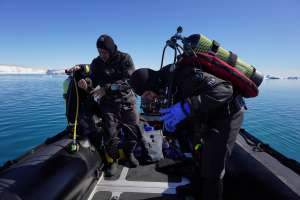
The director of the Millennium Institute for Biodiversity of Antarctic and Subantarctic Ecosystems (BASE), Dr. Elie Poulin, with the director of the Millennium Nucleus for the Ecology and Conservation of Temperate Mesophotic Reef Ecosystems (NUTME), Dr. Alejandro Pérez-Matus dived in the Weddell Sea, Antarctica, on a 15-day international expedition that took them to the inhospitable Larsen B ice shelf.

Santiago, January 13, 2023.- The exchange of disciplinary experiences, together with the incorporation of new research methodologies, was the objective of the polar expedition carried out between the centers of excellence of the National Agency for Research and Development (ANID); Millennium Institute for Biodiversity of Antarctic and Sub-Antarctic Ecosystems (BASE) and Millennium Nucleus for the Ecology and Conservation of Temperate Mesophotic Reef Ecosystems (NUTME).

Picture of: Millennium I. BASE/ N. Politis

For the director of the BASE Millennium Institute and academic from the University of Chile, Dr. Elie Poulin, the collaboration meant fundamental support in scientific work in the field, and opened up new possibilities for carrying out projects: “In highly demanding conditions, as it is to carry out scientific diving in Antarctica, it is essential to have disciplinary experience that allows operations to be carried out safely and successfully. Therefore, working with NUTME was a fantastic experience, which we hope to be able to repeat again”, he said.

Meanwhile, the director of the Millennium Nucleus for the Ecology and Conservation of Temperate Mesophotic Reef Ecosystems (NUTME), Dr. Alejandro Pérez-Matus, carried out his first polar expedition, diving in waters as low as -1.5°, and incorporating highly complex equipment in the dives: “We carry out sampling of marine invertebrates and fish, having the possibility of using BRUVs (Baited Remote Underwater Video cameras). This allowed us to observe fish and species for longer than during a scuba dive, which is limited by cold to just a few minutes. In addition, we take underwater photographs to characterize the seabed and associated species. Finally, we managed to extract seawater at the depths visited to carry out environmental DNA filtering in the on-board laboratory”, he pointed out.

Picture of: Millennium I. BASE/ D. Ramírez

During the 15-day expedition that both centers of excellence carried out on board the French ship Le Commandant Charcot, and within the framework of an international collaboration between SEDNA Expeditions and the Instituto Milenio BASE, more than 12 dives were made in the cold Weddell Sea, with long hours of daily work.

Marine invertebrates and fish were collected during the dives for genetic studies, along with high-quality photography and video of Antarctic organisms and unexplored underwater environments. Both centers will share their experiences in Antarctica, through scientific dissemination activities that they will announce jointly at https://institutobase.cl and https://nutme.cl

By: Direction of Communications Millennium Institute BASE

Main picture: A. Pérez-Matus

Through an international collaboration between SEDNA Expeditions and the Millennium Institute for Biodiversity of Antarctic and Sub-Antarctic Ecosystems (BASE), a group of scientists navigated the frozen waters of the Weddell Sea to carry out studies on microorganisms, lichens, mosses, flowering plants, algae, marine invertebrates, fishes, Adelie and emperor penguins.

Antarctica, January 10th, 2023.- An international collaboration has never been seen before, was the result of the work between SEDNA Expeditions and the BASE Millennium Institute in the 2022-2023 Antarctic campaign that was developed together with scientists from France, the United Kingdom, the United States, and Chile.

With the aim of studying microorganisms, lichens, mosses, flowering plants, algae, marine invertebrates, fishes, and Antarctic seabirds including Adelie and emperor penguins, a group of researchers from the BASE Millennium Institute traveled to one of the most unexplored points of the Antarctic continent, the Larsen B platform, on a 15-day expedition that took them across the Atlantic Ocean and the Weddell Sea.

“This expedition is a pioneer of its kind since it integrates international collaborative work between scientific research, tourism, and science communication, and it allowed us to obtain data from an area little explored by science”, says the director of the BASE Millennium Institute, Dr. Elie Poulin. This collaborative work is the result of an alliance with the SEDNA Expeditions company based in France.

Nicolas Dubreuil, the co-founder of SEDNA Expeditions, highlights the importance of integrating scientific knowledge into Antarctic tourist experiences, with the aim of raising awareness of the contribution of polar research among passengers from all parts of the world: “it has been a great experience working with the BASE Millennium Institute and other groups of scientists, and I believe that today -more than ever- it is very important to bring science closer to people”.

 Alex Ionescu, a world-recognized technology expert, innovator, and investor who was the promoter of the expedition, highlights the International Scientific Collaboration Expedition as a sign of joint work to protect Antarctic ecosystems: “I think it is very important to work together, listen to science and understand that our planet is the only one and that we must protect it”.

 The scientific research team collected samples and data in the field and gave popular science talks to the expedition passengers. In addition, the communication team recorded 360° videos and sounds, to be used in the project “Antarctic Metaverse: a journey of exploration to discover the biodiversity of the Southern Ocean”, which will be carried out this year as a result of the award of the “Public Science Fund” of the Ministry of Science, Technology, Knowledge, and Innovation of the Government of Chile.

The “International Scientific Collaboration Expedition: the Weddell Sea and Larsen Ice Shelf” was composed of BASE Millennium Institute: Dr. Elie Poulin, Dr. Julieta Orlando, Dr. Léa Cabrol, Dr. Juliana Vianna, Dr. Claudio González-Wevar, Dr. Pablo Guerrero, Dr. Máximo Frangopulos, Fabiola León, Dr. Alejandro Pérez-Matus (Pontificia Universidad Católica de Chile and Millennium Nucleus of Ecology and Conservation of temperate mesophotic reed ecosystems, NUTME) and Nadia Politis. The team was also supported by Carla Badani (Universidad de Chile) and Diego Ramírez (patrimonioaccesible.cl).

Text: Nadia Politis | Photo: Julieta Orlando

The vacancies are available for chileans and foreigners with an academic degree of Doctor in accredited national programs or their foreign equivalents, in disciplines related to the required profiles. Applications will be open until February 28, 2023.

The Institute Biodiversity of Antarctic and Subantarctic Ecosystems (IBASE) seeks to provide postdoctoral positions in Metagenomics (1) and Niche Models or Species Distribution Models (1), a call to which Chileans or foreigners can participate to carry out research within the framework of Project ICN2021_002.

For the position of Niche Models or Species Distribution Models (SDMs), a person is sought for biodiversity research in Antarctic and Subantarctic areas, with management of software in the field of Geographic Information Systems, preferably ArcGis. In addition, with medium-advanced handling of R Language, knowledge of modeling packages and script development.

On the other hand, for the scientific postdoctoral position in Metagenomics, a professional is sought for studies of the biodiversity of microbial and benthic, Antarctic and Subantarctic communities, through the bioinformatic analysis of massive sequencing data (metabarcoding and metagenomics). Experience in metagenomics and metabarcoding data generation and analysis, skills in metagenomics and metabarcoding analysis, bioinformatics software, and database mining are required.

The background presentation must be made through the email administracion@institutobase.cl and the deadline expires on February 28, 2023. The final resolution regarding the award of postdoctoral positions will be made by the Council of Principal Investigators of the project the first fortnight of March 2023, and will be subsequently ratified by the National Agency for Research and Development (ANID).

For more details about check the bases:

Metagenomics Postdoctoral  (Spanish)

SMDs Postdoctoral (Spanish)

Metagenomics Postdoctoral  (English)

SMDs Postdoctoral (English)


Mauricio Mardones, the doctoral researcher at the Chilean Antarctic Institute (INACH) and the Millennium BASE Institute, who was awarded a scholarship from the Commission for the Conservation of Antarctic Marine Living Resources (CCAMLR), aims to develop a stock assessment model for the krill fishery.

The doctoral researcher of the Chilean Antarctic Institute (INACH), Millennium BASE Institute, IDEAL Center, and the Fisheries Development Institute (IFOP), Mauricio Mardones, was awarded a scholarship from the Commission for the Conservation of Antarctic Marine Living Resources (CCAMLR). With this scholarship, the Scientific Committee of the Commission and its working groups hope to encourage young scientists to research areas that interest them.

PhD researcher, Mauricio Mardones. Photo: I. Milenio BASE/ C. Barrientos

As Mauricio Mardones pointed out, the objective of his project is to advance in quantitative methodologies to know the krill population dynamics and its management approach, which is currently being discussed in the CCAMLR Scientific Commission. “It is an excellent opportunity to learn more about this important fishery in a high-latitude ecosystem context and as a great academic and scientific challenge that must be lived up to”.

“The chance to work with researchers from INACH and the Antarctic Department of the National Oceanic and Atmospheric Administration, United States (NOAA), is very relevant to my doctoral project because these groups are developing high-level science about krill and its fishery in the Southern Ocean. These interactions will improve the quality of academic and scientific work. In turn, it would allow me to better understand and contribute to the fisheries management of this important species of the Antarctic ecosystem”, said Mauricio.

Mauriciois a marine biologist from the University of Concepción (UdeC) and, currently, is working on his PhD in Antarctic and Sub-Antarctic Sciences at the University of Magallanes (UMAG). He is supervised by Dr. César Cárdenas, a researcher at the Chilean Antarctic Institute and the BASE Millennium Institute. This project is being developed in the context of Antarctic fisheries, specifically in terms of stock assessment, management, and climatic context.

The scholarship will be used to participate in meetings of the Working Groups of the CCAMLR during 2023-2024, one month of work at INACH and two months of internship with NOAA Antarctic Department researchers in La Jolla, California, United States.

“The work Mauricio intends to do is an extremely relevant investigation; it is perfectly framed in the discussions that have taken place in the CCAMLR Scientific Committee since 2019, related to the new management strategy for the krill fishery. In this way, people have been talking about how important it is to evaluate this strategy once it is implemented. “Mauricio’s expertise in evaluating resources in Chile drew him to this topic”, said Dr César Cárdenas.

by Constanza Barrientos and Harry Díaz

Translation by Catlina Ovando

Main photography: BASE Millennium Institute/ C. Barrientos

The program, which is part of the Ministry of Science, Technology, Knowledge, and Innovation’s Science and Society Division, will fund the “Antarctic Metaverse: A virtual exploration trip to learn about southern biodiversity” project in the category of “Knowledge Dissemination Products.” The Faculty of Communication and Image of the University of Chile (FCEI) and the Biodiversity of Antarctic and Sub-Antarctic Ecosystems Millennium Institute (BASE) will work together on regional projects with the cities of Punta Arenas and Puerto Williams.

Knowing the biodiversity of the Antarctic continent and exploring terrestrial and oceanic ecosystems in a friendly and playful language are part of the objectives of the project “Antarctic Metaverse: A Virtual Exploration Trip to Discover Southern Biodiversity,” a project selected by the Science Fund Public from the Ministry of Science, Technology, Knowledge, and Innovation in its 2022 call.

During the call for applications, which took place in July and August, 331 projects were sent in, but only 220 were deemed good enough to move on to the next stage. Three outside experts from the Ministry of Science, Technology, Knowledge, and Innovation looked at all of these projects and made a list of the 47 best ones. “Antarctic Metaverse: An Exploration Trip to Learn About Southern Biodiversity” was one of the top three projects at the national level in the “Knowledge Dissemination Products” category.

For Dr. Elie Poulin, director of the BASE Millennium Institute, the results reflect the interest of the research center of excellence in bringing Antarctic work closer to people: “We are delighted with the award results, which also reflect an institutional articulation and collaboration with the Magallanes region,” he points out.

The project “Antarctic Metaverse: A virtual exploration trip to learn about southern biodiversity” was ranked among the top three projects nationally by a fund that received more than 300 applications. Photo: PAR Explora O’Higgins.

The visibility of the work carried out by Antarctic researchers will also be a pillar of the virtual project aimed at students, teachers, and families. “We believe that it is very relevant to show the participation of women in Antarctic science from its most diverse spectrum: in the natural sciences, social sciences, international Antarctic law, biology, oceanography, genetics, scientific diving, and more,” points out Dr. Julieta Orlando, Alternate Director of the BASE Millennium Institute.

The interdisciplinary team that will carry out the project is made up of five professionals with extensive experience in science communication and new platforms: Víctor Fajnzylber, as director of the project and an academic from the Film School of the Faculty of Communication and Image (FCEI ) from the University of Chile, Dr. Tamara Contador as a content manager, academic at the University of Magallanes, and researcher at the Millennium Institute BASE-INVASAL and CHIC, Walter Waymann as Creative Manager, and specialist in 3D design supervision and organic models with extensive experience in immersive proposals, Jaqueline Meriño as General Coordinator, Molecular Biotechnology Engineer, and specialist in research management, innovation and Linkage with the Environment, and Nadia Politis, a journalist specializing in Science and Digital Communication, as Director of Communications from the Millennium Institute BASE.

The “Antarctic Metaverse: a virtual exploration trip to learn about southern biodiversity” is a partnership between the University of Chile, its Faculty of Communication and Image (FECI) and the XR-Labs Laboratory (Nucleus of Virtual Reality, Video Games, and Emerging Technologies). The initiative is supported by the Chilean Antarctic Institute (INACH), the National Youth Institute (INJUV), the Department of Sciences of the Municipality of Cerro Navia, the Cultural Committee of Puerto Williams, the Museum Anthropological Martin Gusinde of Puerto Williams, the Cabo de Hornos International Center for Studies of Global Change and Biocultural Conservation (CHIC), and Fundación Tremendas.

The Biodiversity Antarctic and Sub-Antarctic Ecosystems Millennium Institute (BASE) is a scientific research center of excellence that is funded by the Millennium Scientific Initiative (Millennium) of the National Research and Development Agency (ANID) and seeks to study the past, present, and future of Antarctic and sub-Antarctic biodiversity: the fate of a unique biota, in a changing world.

More information at http://institutobase.cl

By: Constanza Barrientos

Translated by: Catalina Ovando