- Two studies published in 2026, with the participation of researchers from the University of Chile, combined environmental DNA analysis, protein structural modelling and in situ culture devices to explore the set of genes and mechanisms associated with antimicrobial resistance, known as the resistome, in Antarctic soils.
- The papers, developed through collaboration between the BASE Millennium Institute, the mBioClim Ring and teams from different institutions, deepen a Chilean research line that has had wide international impact and reinforce the importance of studying the White Continent from a One Health perspective, which recognises the close relationship between human, animal and environmental health.
Long before humanity began using antibiotics, microorganisms were already producing substances to compete with one another and developing mechanisms to defend themselves against them. Part of that ancient evolutionary race remains recorded in Antarctic soils, where there is a microbial diversity that is only now beginning to be explored.
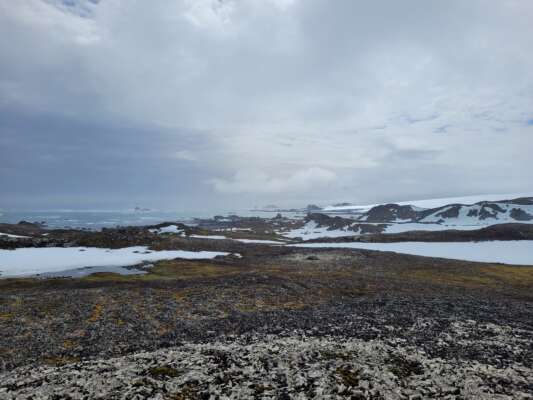
Two recent studies, published in the journals iMetaOmics and Environment & Health, show that the White Continent can be understood as a natural archive of the evolution of antimicrobial resistance. From complementary approaches, one reconstructed the genetic information of entire microbial communities, while the other recovered living bacteria that normally fall outside the reach of conventional cultures.
These papers add to the sustained growth of Chilean polar science. According to information released by the Chilean Antarctic Institute, researchers with a national affiliation took part in 134 Antarctic scientific publications in 2025, the highest figure recorded for the country. The two studies published in 2026 represent a continuation of this trajectory, marked by collaborative work among universities, scientific centres and national programmes.
A finding that travelled the world
The new publications have a direct precedent. In 2022, a team led by Andrés Marcoleta, faculty member at the Department of Biology of the Faculty of Sciences of the University of Chile, published a study on the resistome of soils on the Antarctic Peninsula. The research showed that these environments hosted native bacteria resistant to multiple antibiotics, especially in areas without evident human intervention, supporting the natural and ancestral character of this resistome. In some isolates resistant to colistin, a last-line antibiotic used against particularly difficult-to-treat infections, the known resistance genes were not detected, suggesting the existence of mechanisms that have not yet been characterised. Resistance genes associated with mobile genetic elements, potentially able to circulate among microorganisms, were also identified.
The finding had wide international impact and opened discussion both on the ancestral origin of resistance and on the questions posed by ice melt regarding contact between previously isolated microorganisms and other ecosystems.
That work did not remain an isolated finding. Its results and questions contributed to the development of the mBioClim Ring project, created to study how climate change modifies microbial communities in Antarctic soils and the distribution of resistance genes and traits associated with virulence.
In 2024, this line of research extended to the soils of Union Glacier, in the interior of West Antarctica, less than 1,000 kilometres from the South Pole. A less diverse microbial community was described there than that of maritime Antarctica, but with a distinctive resistome and bacteria able to resist up to 24 antibiotics.
Referring to the evolution of this research line, Dr. Andrés Marcoleta, director of the Integrative Microbiology Group (GMI_UChile) and faculty member at the Department of Biology of the Faculty of Sciences of the University of Chile, notes: “The 2022 study showed us that Antarctic soils host an extremely high diversity of bacteria, some of them resistant to multiple antibiotics used in clinical practice. This broad resistome reflects ecological and evolutionary processes that long predate the medical use of these drugs. Later work has allowed us to move from that first observation towards a deeper understanding of its diversity, its evolutionary history and the bacteria that harbour these mechanisms.”
A map of Antarctic beta-lactamases
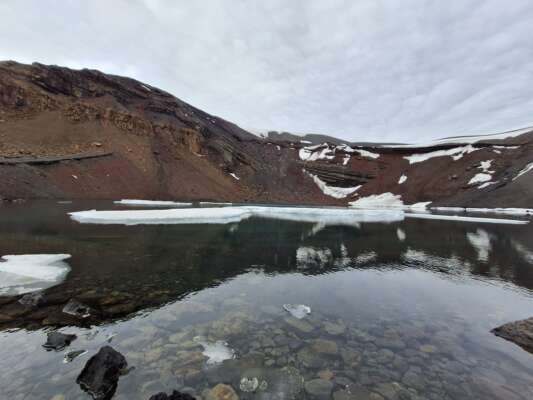
The first of the new studies, published in iMetaOmics, analysed 81 metagenomes from Antarctic and subantarctic soils, that is, sets of DNA sequences that make it possible to study entire microbial communities without having to culture each microorganism. The research was led by José Coche-Miranda, Patricio Arros and Andrés Marcoleta, and included the participation of Julieta Orlando and Francisco Chávez, faculty members at the Faculty of Sciences of the University of Chile.
The work was made possible by the partnership between the BASE Millennium Institute and the mBioClim Ring, which brought together samples, data and scientific capacities developed by different teams. The study combined protein sequence comparisons with three-dimensional structure prediction and functional inference, a strategy especially useful for detecting environmental enzymes that can differ greatly, in their sequence, from those known in clinical contexts.
The researchers identified 1,916 candidate beta-lactamase sequences, enzymes capable of inactivating beta-lactam antibiotics, supported by the concordance between their sequences and their predicted molecular structures. Although their activity will still need to be confirmed experimentally, many were very different from known beta-lactamases and yet conserved the architecture and catalytic elements that characterise them. This combination of diversity and conservation is consistent with a deep evolutionary history of these enzyme families.
The beta-lactamases also showed differentiated patterns among the subantarctic islands, the Antarctic Peninsula and the continental cold deserts, reflecting changes in the composition of microbial communities. Taken together, the results reinforce the idea that resistance is not exclusively a consequence of modern medicine, but also an ancestral ecological trait, shaped by competition and the adaptation of microorganisms.
On this point, Dr. Francisco Chávez, director of the Systems Microbiology Laboratory (SysmicroLab) and faculty member at the Department of Biology of the Faculty of Sciences of the University of Chile, explains: “The aim is not to present Antarctic bacteria as an immediate threat, but to understand the ecological history of these resistance mechanisms. One Health reminds us that antimicrobial resistance cannot be studied only in hospitals: we must also observe the microorganisms, animals and ecosystems where that diversity originates and evolves”.
Recovering the microbial dark matter
The second study, published in the journal Environment & Health, approached the resistome from a complementary perspective: the recovery of living bacteria in order to study their characteristics directly.
The research was led by Jacquelinne Acuña, recently appointed as a faculty member at the Department of Biology of the Faculty of Sciences of the University of Chile. The team compared traditional culture methods with in situ culture devices, also known as culture chips. These allow microorganisms to begin growing under conditions closer to those of their original environment, before being recovered and analysed in the laboratory.
The strategy made it possible to access rare bacteria or those underrepresented in conventional cultures. When evaluating 158 isolates against 35 antimicrobial agents, the researchers found widely distributed resistance and some bacteria able to tolerate more than 20 of them. They also detected activities that in clinical contexts are associated with virulence, although their presence, on its own, does not demonstrate that these microorganisms are pathogens.
On the contribution of this approach, Dr. Acuña highlights: “In situ culture devices allow us to access a fraction of bacterial diversity that usually remains hidden. Recovering these microorganisms alive is essential to move from genetic information to the experimental confirmation of their resistance and adaptation capacities.”
Many functions classified in clinical contexts as resistance or virulence may originally have arisen to obtain nutrients, compete with other microorganisms or survive the extreme conditions of the Antarctic environment. For that reason, these results should be interpreted in their ecological context and not as direct evidence of a health threat.
Two approaches to the same question
The iMetaOmics and Environment & Health studies make it possible to observe the Antarctic resistome at complementary scales. The analysis of environmental DNA, known as metagenomics, reveals genes, proteins and evolutionary relationships at the level of entire microbial communities, while in situ culture devices make it possible to recover living microorganisms and experimentally evaluate their properties.
This integration also strengthens a new scientific capacity at the Faculty of Sciences of the University of Chile. Dr. Acuña’s experience in culturing environmental microorganisms is added to the work of Dr. Marcoleta in genomics, antimicrobial resistance and gene transfer, that of Dr. Chávez on interactions among bacteria, hosts and environments, and that of Dr. Julieta Orlando on the microbial ecology of extreme environments.
In the context of glacier retreat, studying these communities is especially relevant. As new ice-free soils appear, microorganisms that were previously isolated may become part of new ecological networks. This does not necessarily imply the emergence of health risks, but it does underline the need to integrate genetic analysis, culture and environmental monitoring in order to understand how microorganisms respond to a continent in transformation.
From a broader perspective, Dr. Julieta Orlando, deputy director of the BASE Millennium Institute and faculty member at the Department of Ecological Sciences of the Faculty of Sciences of the University of Chile, emphasises: “Antarctica is not a territory disconnected from the rest of the planet. The processes that occur there are part of global ecological systems. Studying its microbial biodiversity not only expands our knowledge of life under extreme conditions, but also provides information needed to understand and protect ecosystem health in a changing world.”
Together, the studies consolidate Antarctica as a natural laboratory for reconstructing the deep history of antimicrobial resistance and observing how it may reorganise on a planet in transformation. The next steps will be to experimentally confirm the activity of the candidate enzymes, determine which of these genes can move between bacteria, and maintain monitoring series that make it possible to distinguish the natural resistome from changes associated with ice melt or human activity.
Rather than announcing an immediate threat, this research line seeks to build knowledge and establish baselines that make it possible to anticipate changes, guide environmental surveillance and protect ecosystems whose microbial diversity we still know only in part.
Press release: SysMicro, LEMi, GMI_UChile.